How Temu exploded in popularity and in controversy
Tired of hiring agencies that underperform?
Can’t find a partner that understands your business?
Vendry conducts an entire agency search for you, from start to finish by:
1. Introducing you to top agencies in your industry 2. Gathering and vetting proposals on your behalf 3. Saving you 20+ hours on “get to know you calls”
AND….Vendry only makes money if you end up hiring one of their vetted agencies, so they are incentivized to find you the perfect match.
Their team has helped Spotify, Microsoft, Upwork, Ripple and 100’s of other brands hire agency partners.
These days, there aren’t many places where you can find a $21 drone and a 10-pack of socks for $9.62—certainly not in the same store. But you can find both those things on Temu, the e-commerce shopping app that launched in the U.S. in September 2022.
Temu is known for a few things—its dollar-store pricing, cheap shipping. Some have called it “Amazon on steroids.” But Temu has turned heads for a whole bunch of other reasons as well.
This week, Case Studied explores how Temu became a household name in North America and the controversies it’s sparked along the way.
The Brief:
Temu is a subsidiary of PDD Holdings, a Shanghai-based multinational commerce group. PPD also owns the e-commerce app Pinduoduo, which has seen massive success selling heavily discounted products in China. And when we say massive, we’re talkin’ $102 billion market cap massive.
In the face of economic turbulence and soaring inflation, it makes sense that more people would turn to a site that sells all kinds of goods at extremely cheap prices. Seriously, they’ve got hammers, computer keyboards, sun dresses, you name it.
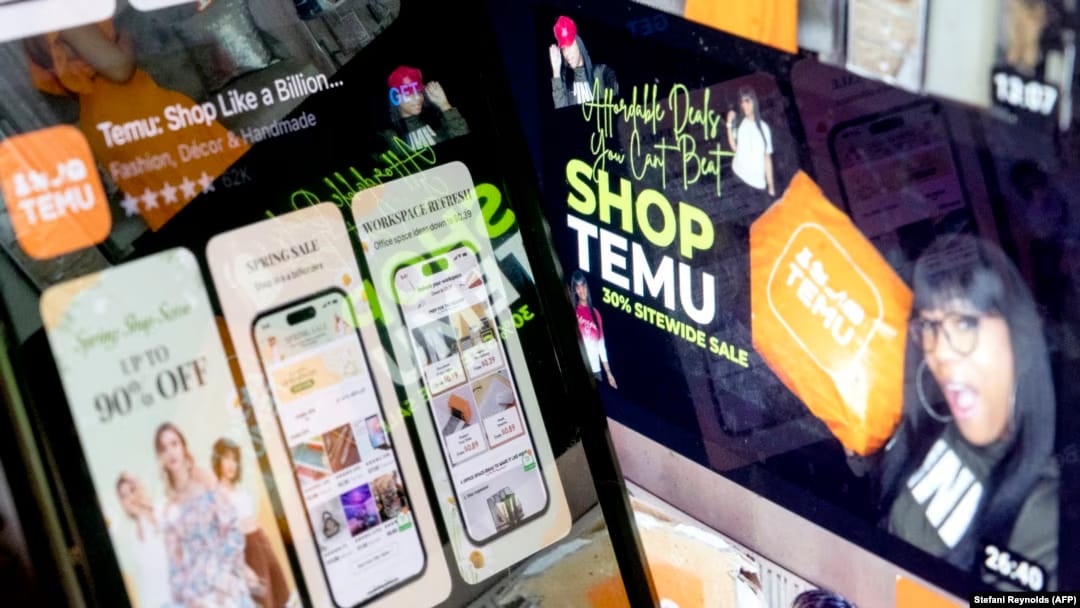
Temu made a hard push towards awareness to get more users onto the app. It spent big on several Super Bowl ads in 2023 and 2024 with slogans like “Shop like a billionaire,” plus major investments in Facebook, Instagram, and Google ads. But one ad campaign has come under fire for privacy concerns, and there’s an ongoing investigation into whether the products sold on the app have been made with forced labor.
The Execution:
We’re going to talk about Temu’s ad spend, the forced labor investigation, and its controversial ad campaign here. Let’s get into the details of all three.
Last year, Temu spent about $2 billion on Facebook and Instagram ads. It was the No. 1 advertiser by revenue on Meta and made Google’s list of top 5 advertisers—talk about an investment. Not only does Temu invest a ton in these platforms, but their efforts are quite extraordinary in their complexity. It has been reported that Temu leverages 100,000 different creative variations across Google and Meta ads to improve their performance, something no brand could possibly replicate.
On the supply chain front, there’s an ongoing investigation into whether Temu, Nike, Adidas, and Shein comply with a 2021 U.S. law that bars the import of goods made using forced Uyghur labor. This has led to additional scrutiny in regards to how Temu’s products are manufactured to justify such as low cost.
And lastly, there’s the ad campaign that recently came under fire. This started when Temu offered consumers a cash giveaway if they got other people to sign up for the app using a sharable link. The referrer and the referee would each receive a cash reward, which they would receive to their PayPal accounts or in Temu store credit. Existing Temu users could participate as well but they had to reach a higher threshold to access the rewards.
Initially, thousands of people were posting links across social media to cash in on the promotion. But then, posts started popping up scrutinizing the fine print of the user agreement. The section in question stated that participants gave the company consent to use and publish their “photo, name likeness, voice, opinions, statements, biographical information, and/or hometown and state for promotional or advertising purposes in any media worldwide.” To top it off, Temu added that this can be done “in perpetuity.”
The Results:
In an interim congressional report, preliminary findings were shared by the Select Committee on the Strategic Competition Between the United States and the Chinese Communist Party.
"These results are shocking,” said Chairman Mike Gallagher. “Temu is doing next to nothing to keep its supply chains free from slave labor. At the same time, Temu and Shein are building empires around the de minimis loophole in our import rules—dodging import taxes and evading scrutiny on the millions of goods they sell to Americans.”
The loophole Gallagher mentioned has to do with a current U.S. law that allows packages worth less than $800 to be exempt from customs duties. According to the report, Shein and Temu are responsible for nearly 600,000 packages worth less than $800 that are shipped to the U.S. every day. On top of that, it’s estimated that these two Chinese companies account for more than 30% of all daily shipments under the $800 threshold.
When it comes to its supply chain, Temu claims that it’s not responsible for third-party sellers using its platform. And it has a lot of suppliers—over 80,000. The report found that the only measure Temu took to ensure that it was in compliance with this U.S. law was having suppliers agree to “boilerplate terms and conditions” that prohibit the use of forced labor.
As far as the ad campaign, you can imagine the highly concerning doors that agreement leaves open. People were worried about deepfake advertisements, their data being sold, and many more potential ways their information could be leveraged.
Temu denied claims that that was their intention and “tweaked” the terms and conditions “to make it clear that we only ever use username and profile pictures in this promotion for referral functionality and winner announcements.” It went on to say that, “The previous terms and conditions were overly broad and inadvertently included promotional uses that Temu does not engage in.”
A Temu spokesperson initially said giveaways were commonplace and that its e-commerce rival Shein ran promotions with “nearly identical terms and conditions.”
“If these standard terms and conditions for run-of-the-mill promotional activities is newsworthy, then we urge you to be fair and report on their use by other companies instead of singling out Temu.”
The Takeaways:
Temu is an incredibly interesting case study as you can’t analyze their marketing without also considering the political and supply chain components of their business.
And while it might not seem relevant to your brand, a company with this large of a footprint on the retail landscape has a ton of both direct and indirect consequences for your business.
Given how much there is to disect, let’s get into some of the important lessons and takeaways that Temu can teach us.
1. Quality over quantity
Few if any brands can compete with Temu when it comes to price and variety. Given their gigantic catalog of products as well as their 100k ad variations, trying to keep up is not a good strategy.
Instead, brands need to invest in quality, both in terms of what they sell and how they market it, to combat incumbents like Temu.
Lean into how your products are different, how they are made, and what benefits your consumers gain from using them. Unfortunately, winning on price isn’t an option anymore.
2. Transparency matters to consumers
One trend that continues to strengthen across all industries over the past few years is consumers’ push for transparency from brands, both when it comes to data collection and as well their supply chains.
The controversies plaguing Temu are not unique and many other brands have suffered a similar fate due to their lack of openness regarding their business practices.
Being transparent and giving customers and inside look at how your brand conducts business can be a terrific marketing pillar and point of differentiation in 2024.
Don't miss the next Case Studied™.
Join 40,000+ marketers and receive a breakdown of the world's best brands every week.