How Slack created a viral video with an agency that rejected their business.
Vol 34. Slack: Turning rejection into virality 📽️
Close your eyes and transport yourself back to June of 2013. Lorde had just released her debut single “Royals.” Serena Williams won her second French Open title. And Slack was an unknown startup gearing up to release its instant-message team communication tool, to save the world from the horrors of internal company email threads.
Prior to the product release, Slack’s founder Stewart Butterfield tried to get a promotional video made by the trendy video creative agency, Sandwich. And he was promptly denied.
This week, Case Studied explores how Slack was able to turn their biggest rejection into a massive win for the business, using the power of video.
The Brief:
This story starts with Butterfield sending an email to the founder of Sandwich, Adam Lisagor. He said he was developing a new communications tool and wanted to work with Sandwich on a video to promote it.
Butterfield gave Lisagor a high-level pitch of Slack’s product, explaining that it’s a group chat communications tool meant to replace email with robust search capabilities and the ability to integrate with popular tools like Dropbox, Jira, and Asana.
“There’s a lot more to it than that, but who cares,” Butterfield wrote. “No one wants to read all this shit. They want to see a video. And, as to that, we want to make one with you.”
The following day, Lisagor responded saying, “My whole business runs on email and email alone.” He said they’d tried other communications tools, “but it just turns out that nothing works like good old fashioned email. So I’m one of those people for whom an alternative solution is a very tough sell. Which makes it even harder for me to be a good person to make a video for you.”
For 8 months, that was that. Sandwich continued using “good old fashioned email.” Meanwhile, Slack saw unprecedented growth. Within a year of releasing the product, the company had over 13,000 active teams on the platform and was bringing in $3.5m in annual recurring revenue, plus an additional one million being added every 6 weeks. And users were consistent—93% of teams who onboarded, stayed on board.
Some companies even started pitching their Slack membership as a perk to potential candidates during the hiring process—right alongside unlimited PTO and bagel Thursdays.
It was February, smack in the middle of this high-growth time, when Butterfield received an email from Lisagor. “I’ve been hearing nothing but good things about Slack. Everyone on my team is clamoring to try it,” he wrote.
So, Butterfield got Sandwich and their 9-person team onto the platform. Almost six weeks into using it, Lisagor sent feedback: “This is not hyperbole-Slack has changed my company culture for the better.”
The Execution:
Once the Sandwich team became believers, they were ready to yell it from the rooftops.
“I have a fantasy that we now get to make a video for Slack, using ourselves (Sandwich Video) as the subjects, shooting it in our own office, making a Sandwich video for a product that has improved Sandwich Video,” Lisagor said.
Of course, Butterfield was in. And from there, the video entitled, “So yeah, we tried Slack” was born.
"So Yeah, We Tried Slack …"
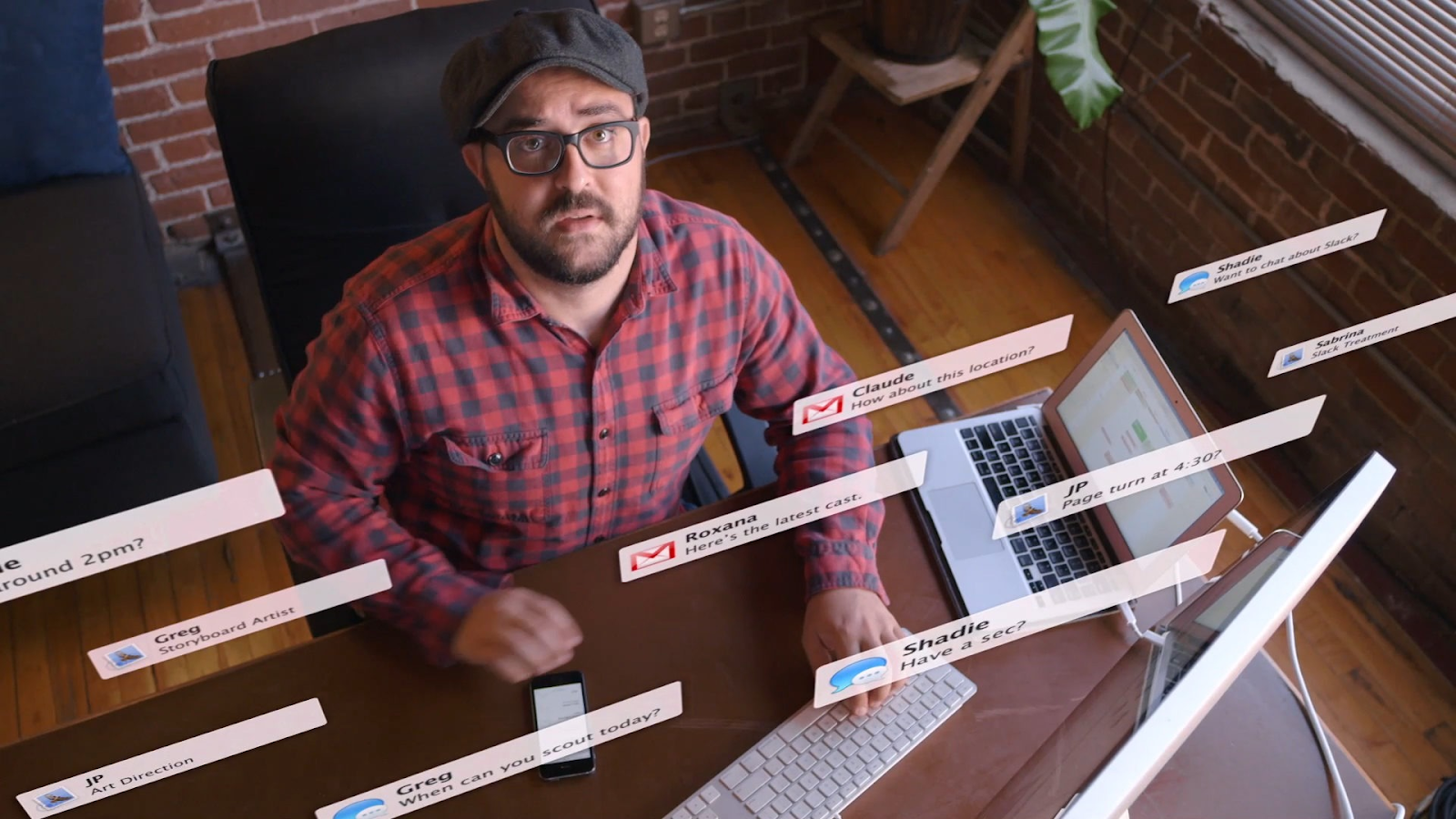
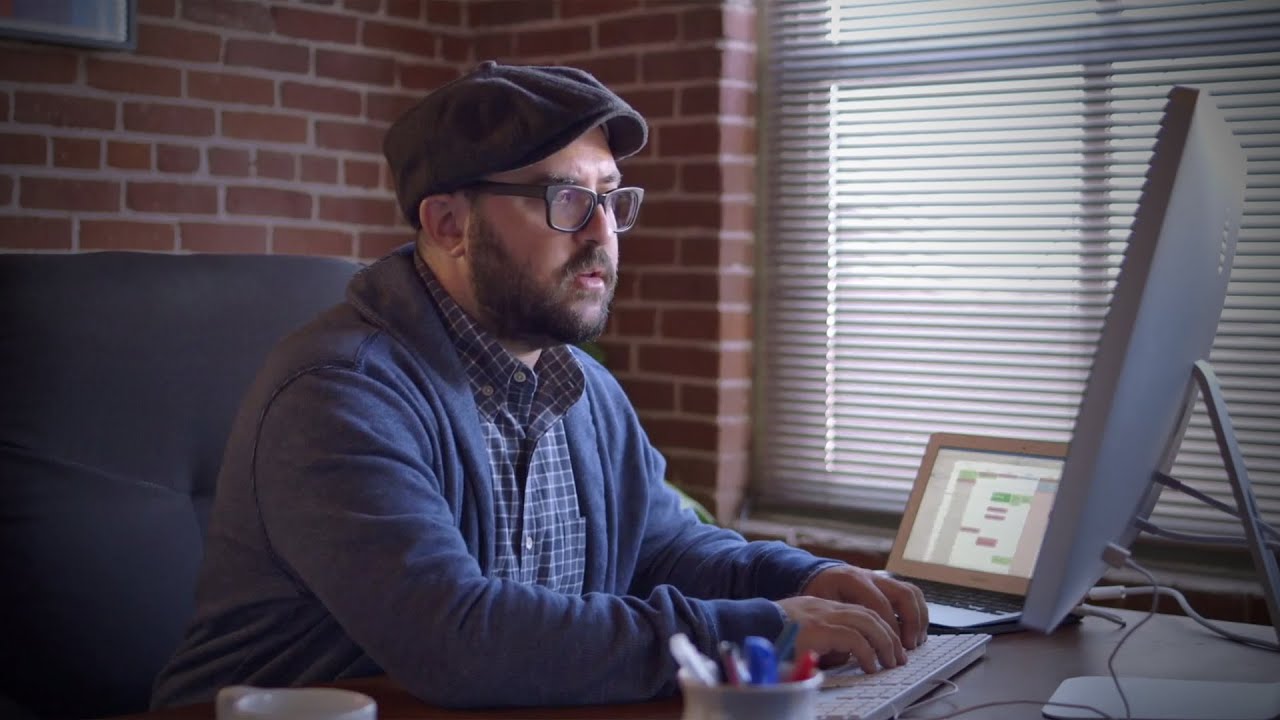
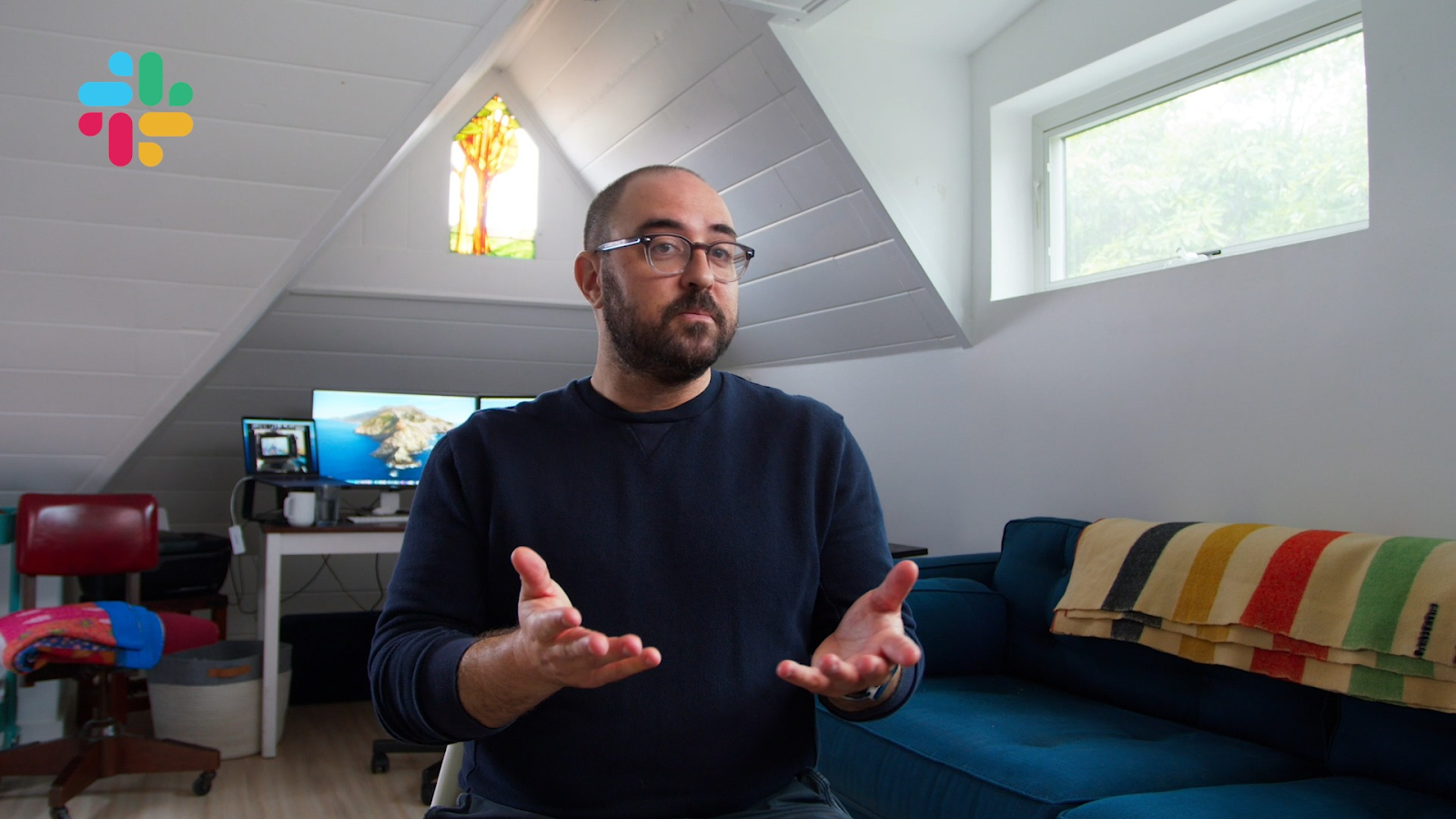
It’s vibe is that of a testimonial… that’s also a promotional ad… that’s also made by creative pros who know how to add really smart, entertaining elements. It tells the story of Butterfield’s initial email and gives a look at what communication at Sandwich looked like pre-Slack.
The messaging dances between being entertaining, on the nose, and realistic. One moment, there’s an employee saying, “You make channels in Slack, which is perfect for discussing topics in groups, depending on who needs to be in on the conversation.” Moments later, another person says, “I use it to send funny pictures.”
This wasn’t the only video Sandwich made for Slack, either. When the COVID-19 pandemic hit and drove corporate employees to work from home, Sandwich saw an opportunity.
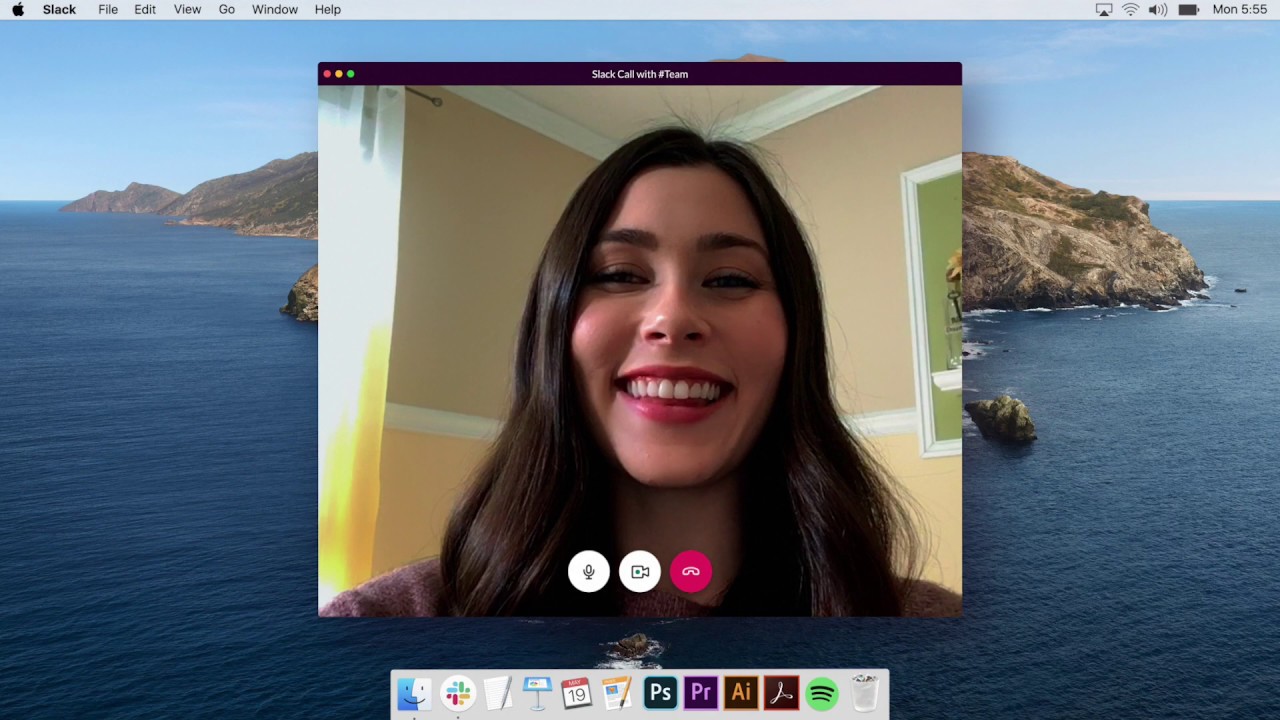
In a blog post on the Sandwich website, Lisagor said “What we figured we could do is tell the story of how we continued to work as a team using our favorite collaboration tool: Slack. And we could tell the story in a completely new way, working from home (using Slack) to make the video itself (for Slack).”
The Sandwich team put a teaser together and sent it off to Butterfield. He gave them the greenlight and from there, Sandwich created the video “Sandwich works from home — in Slack.”
Sandwich works from home — in Slack
The team “developed a whole new set of methods for producing a commercial using real equipment, entirely from the homes of our team, with our families around and everything.” Lisagor said this second video, under the circumstances, was even more special than the first one, “because we found along the way that Slack isn’t just how we work together; it’s where our team stays connected, and where we can feel less isolated during these times when it’s so easy to lose connection.”
The first Sandwich video racked up 1.3m views, with the second coming in at 15k. But beyond numbers, the story itself proved to be a powerful tool. Sandwich says that, “years later, people still tell them all the time that they used their video to convince their management to give Slack a try.”
For Sandwich’s part, they added another viral video to their roster. And thanks to the second video, they were able to create a framework for making commercials during quarantine and rolled out an offering based on it called Lunchbox with Sandwich.
While most agency client partnerships tend to have a short lifespan (unless of course you use Vendry to hire better agencies), this is an example of both a client and agency reaping the benefits of their collaboration years after it was conceived.
The Takeaways:
Slack might be a unicorn, but it’s early campaign with Sandwich is incredibly relatable. Here are a few takeaways from their story:
1. Your marketing needs to combat objections
Any B2B sales person will tell you, that to effectively get customers to take actions, you need to address their objections head on.
Marketing is no different.
The best marketing shows customers how their life will improve with your product and remove barriers to purchase, as quickly as possible.
In the case of Slack’s video with Sandwich, they perfectly address the challenges that Sandwich was having internally and the reasons why they were initially hesitant to move away from email.
2. The perfect agency is worth fighting for
You rarely hear about brands actively pursuing an agency, which is why Butterfield’s persistence to partner with Sandwich was so unique. While there are over 80k+ marketing agencies in North America, you’d be surprised how few actually align with your business needs, industry and DNA.
Services like Vendry exist to help you match with the perfect agency or perhaps you already have a partner in mind. Either way, a great agency is worth pursuing and even more so, keeping around.
3. Show, don’t tell
The value of instant message in the workplace instead of email feels obvious in 2024, but back when Slack launched, it was a very novel concept, one a lot of business owners struggled to wrap their heads around.
Video marketing is incredibly effective when done right, as it enables you to show off what your product does and provide a more digestible format for explaining its use cases.
Consider testing video as part of your marketing mix, especially if you sell something that is difficult to describe.
Meet your brand’s believers: Looking for the right agency that can elevate your marketing? Vendry will find ’em for you. Just tell them about your goals and your criteria, and within 7 days, you’ll have a list of vetted, aligned agency partners. So go ahead—start here.
Don't miss the next Case Studied™.
Join 40,000+ marketers and receive a breakdown of the world's best brands every week.