Does your brand qualify to work with the top-performing marketing and design agencies in the world? Take our quiz and find out now.
How Patagonia disrupted the most profitable shopping day of the year
Patagonia’s mission statement is, “Build the best product, cause no unnecessary harm, use business to inspire, and implement solutions to the environmental crisis.”
The brand proved its commitment to this mission time and time again. It’s contributed at least 1% of annual sales to the preservation and restoration of the environment since 1986. It began using only organically grown cotton in all its products that are made from virgin cotton in 1996. By 2025, it will eliminate virgin petroleum material from its products, and its packaging will be 100% reusable, home-compostable, renewable, or recyclable.
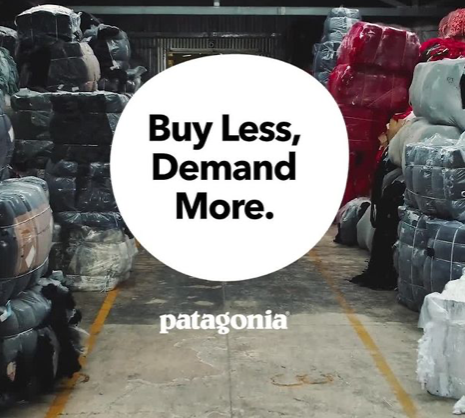
Some of the brand’s mission-driven actions get a ton of publicity, while some fly under the radar. But one of the bolder moves Patagonia made was telling consumers not to purchase their products on Black Friday.
This week, Case Studied explores how Patagonia disrupted the most profitable shopping day of the year - Black Friday.
The Brief:
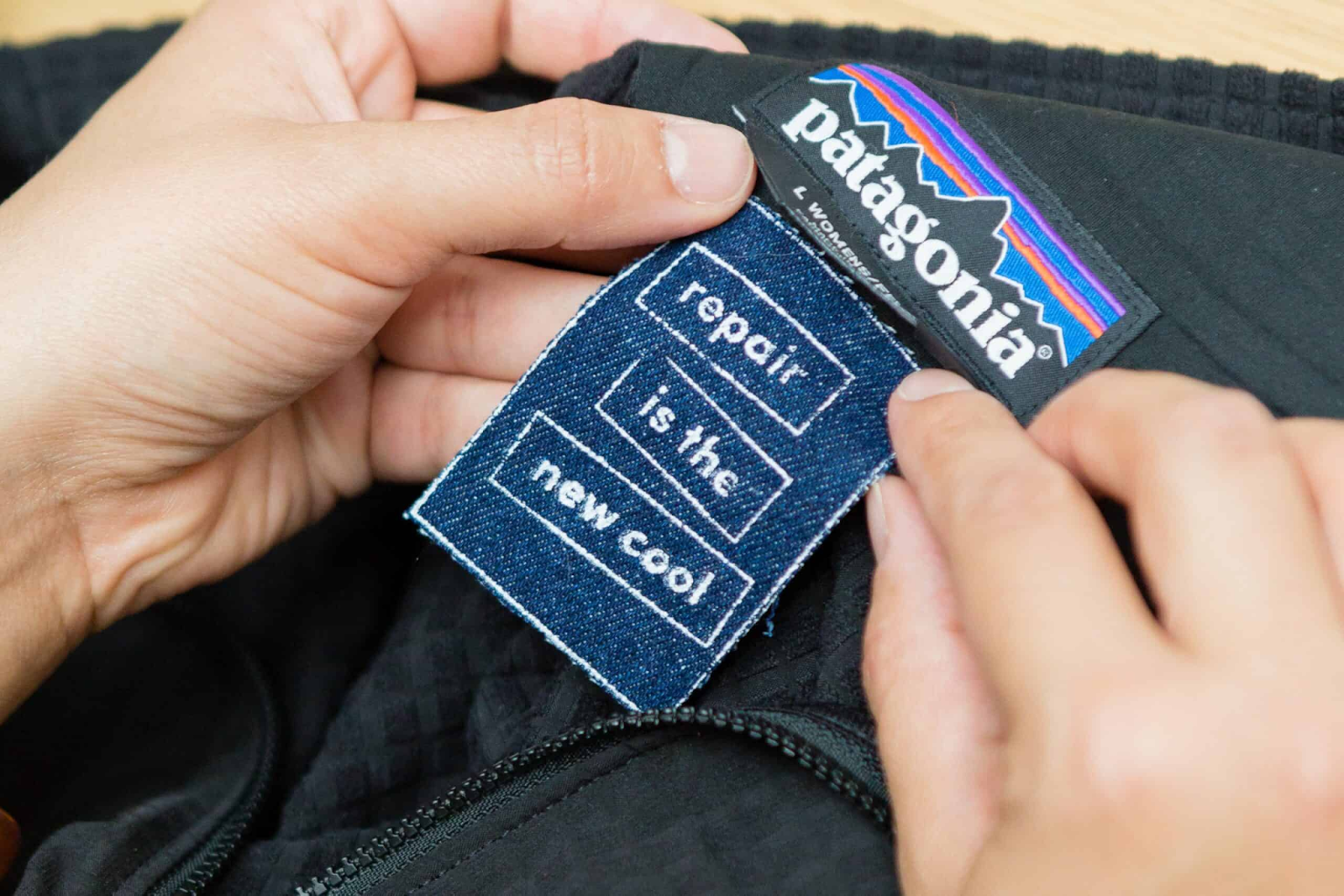
Patagonia launched the Common Threads Garment Recycling Program in 2005 with the goal of making all Patagonia products recyclable by 2010. It allows customers to return their used clothing so they can be taken to a fiber manufacturer and used to make new products.
The initiative asks customers to align their behavior with the values that Patagonia upholds as a company. That means reducing their consumption, repairing what breaks, reusing or reselling what they no longer wear, and recycling what’s worn out.
To truly evangelize this mission, Patagonia set out to create a campaign that took the idea of conscious consumption to the extreme.
The Execution:
These days it’s not uncommon for mission-driven brands to run special initiatives during Black Friday—a certain portion of profits get donated, they feature products from special mission-driven affiliates, things like that. But this wasn’t the norm back in 2011.
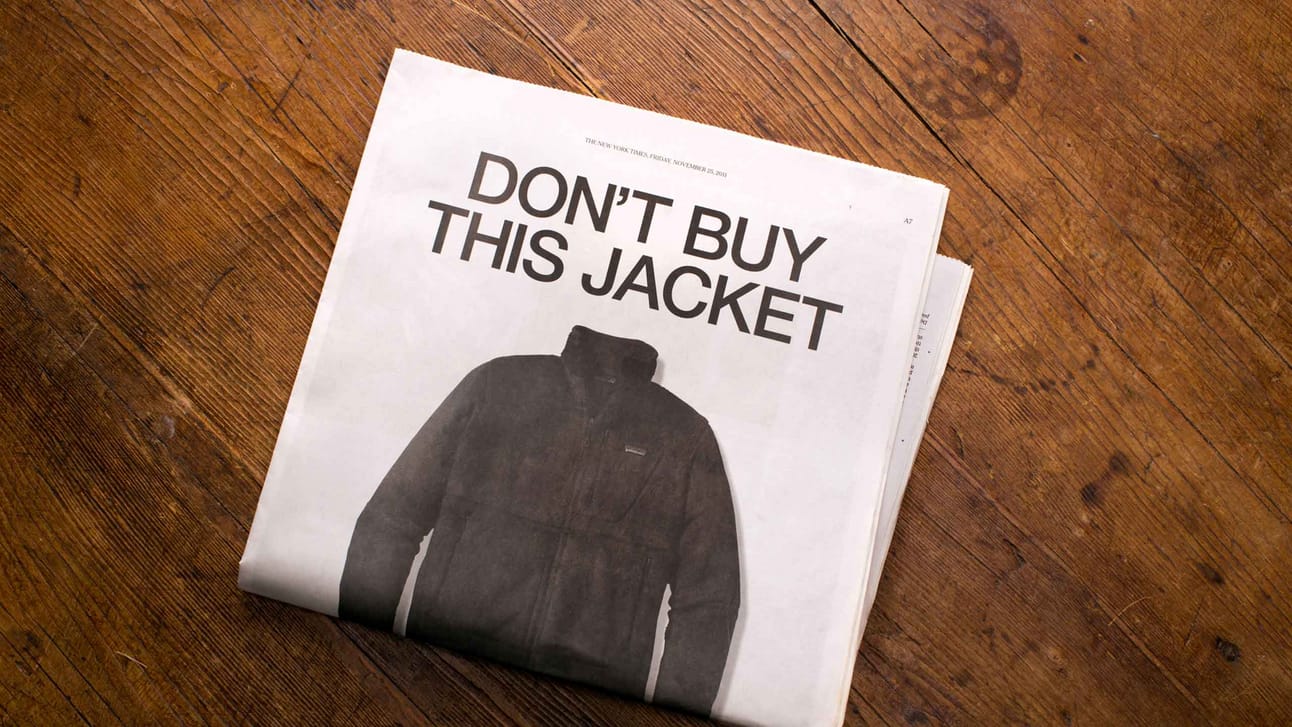
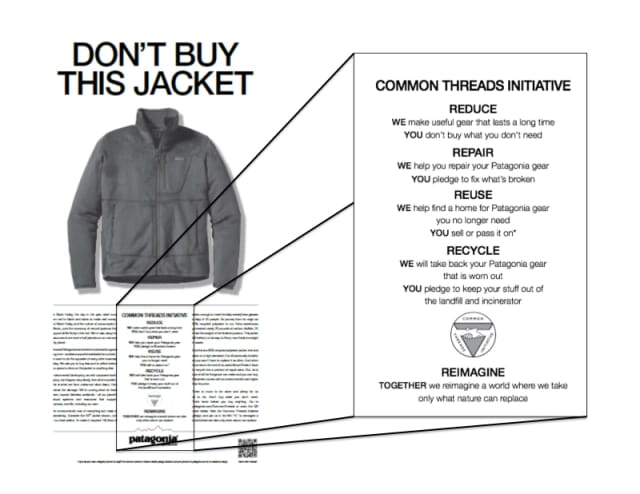
That’s what made Patagonia’s full-page ad in the New York Times stand out so much. It displayed one of their best-selling jackets with the headline, “Don’t buy this jacket.” The ad copy addressed the culture of consumption that Black Friday emulates and the details of its impact on the environment.
The ad goes on to list out the environmental impact of the jacket itself—how much water was required to make it, the amount of carbon dioxide it used to be transported. It also lists the steps Patagonia has taken to reduce that impact—the jacket is made from majority recycled polyester, it’s recyclable, etc.
Running right down the middle of the ad is the Common Threads Initiative pledge. It lays out what the brand has pledged to do to limit its environmental impact and what it invites the consumer to do as part of the partnership.
Readers were encouraged to scan a QR code or go to a provided link to take the pledge “to reimagine a world where we take only what nature can replace.” In an article explaining the ad, Patagonia said it used the provocative headline to call attention to the issue in a strong, clear way.
“We used the line “Don’t Buy This Shirt” several years ago in a catalog essay, to strong response. We hope that this headline will prompt as many people as possible to read the full ad, then go to our website to take the Common Threads Initiative pledge.”
The Results:
As contradictory as the ad’s message was to its bottom line, the powerful display of Patagonia’s values and mission actually made them money. Sales increased 30% the following year, jumping to $543m.
While it wasn’t the brand’s main goal, Patagonia provided a clear example that environmental initiatives quite literally pay off.
“Patagonia is an experiment, an attempt to prove that being ecologically responsible works,”said Yvon Chouinard, Patagonia’s founder. “Every time we’ve done the right thing, it’s ended up making us more money.”
When the iconic ad initially launched, Patagonia was the only retailer in the country asking people to buy less on Black Friday. Today, several brands have adopted the same tactic or at least taken a page from the same book.
REI launched #OptOutside in 2015, closing all of its stores on Thanksgiving and Black Friday. The French skincare brand Typology launched the “Black for Good” movement, which asks consumers for “donations, not discounts.” With every order placed from Nov. 24-17, it donates a set amount of money to various NGOs.
Overall, the ad was a major win for Patagonia. It garnered a ton of media attention, grew awareness for the brand’s garment recycling program, and many brands followed in its footsteps, supporting the overall mission of changing consumer behavior.
The Takeaways:
Patagonia’s Black Friday ad is an inspirational example for many reasons. Here’s how you can take that inspiration and apply it to your business.
1. Go against the grain
Patagonia zigged on a day when every other brand zagged. And that’s exactly what helped make the ad such a success—it was different, provocative, and eye-catching.
Consider outside-the-box ideas and strategies, no matter how crazy or contradictory they seem. Instead of meeting them with resistance, brainstorm how you could make them work.
2. Demonstrate authenticity
“Don’t buy this jacket” worked for Patagonia because it aligned with its mission and honestly addressed the brand’s challenges in achieving that mission.
Find strategic, tasteful ways to demonstrate self-awareness for your brand. But don’t just rely on words—take the action to back it up.
3. Take calculated risks
Asking people to not buy your product is a pretty big risk. Patagonia had seen success with the tagline on a smaller scale and used those insights to inform its Black Friday ad.
Test the waters and gather data before you go big with a specific strategy or campaign. See what small wins you can achieve and use them to build up to the larger ones.
Don't miss the next Case Studied™.
Join 40,000+ marketers and receive a breakdown of the world's best brands every week.