Vol 17. Barbie: Turning a movie into a movement 👱♀️
How Mattel’s investment in the Barbie movie reshaped the brand and catapulted sales
Case Studied™ is brought to you by Vendry, the easiest way to find & get matched with better agency partners in <7 days. 100% free.
How Mattel’s investment in the Barbie movie reshaped the brand and catapulted sales
Whether you wanted to or not, you’ve likely heard about:
the Barbie movie
the Barbie movie marketing campaign.
Turns out, that awareness you willingly or unwillingly have is a highly predictive box office metric. It’s called unaided awareness and it’s gauged by asking survey respondents the open-ended question, “What upcoming movies are you aware of?”
It probably won’t come as a surprise that the Barbie movie’s unaided awareness was higher than any other film The Quorum tracked last year. And that’s the first of many record-setting numbers from Barbie the movie and Barbie the toy.
This week, Case Studied explores how Mattel’s investment in the Barbie movie catapulted brand sales and reshaped how people view the doll.
The Brief:
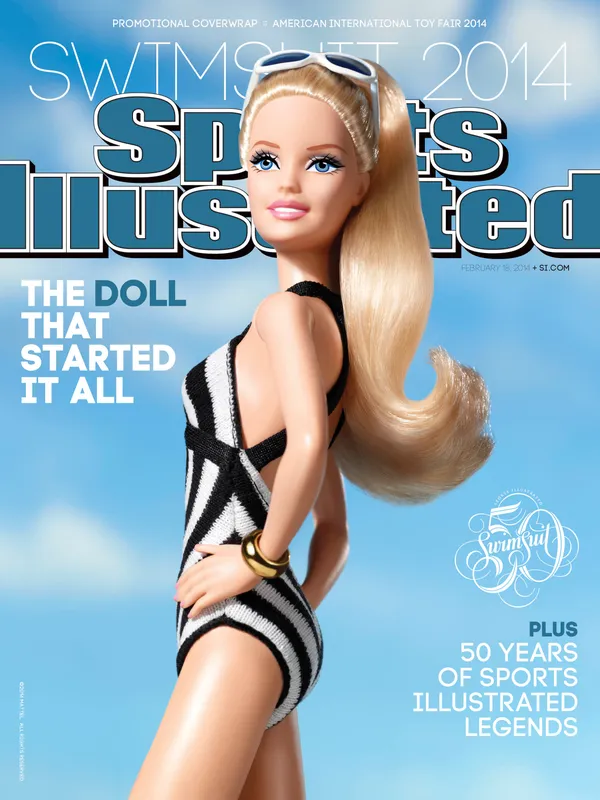
Since being released in 1959, Barbie has gone through waves of popularity and prevalence. In 2014, the doll reached a low point.
At the time, studies were coming out about what Barbie’s body would be like if a real woman had her dimensions. They revealed that she wouldn’t be capable of lifting her head and she would only have room for half a liver. Coupled with a persistent lack of racial diversity, these issues were damaging the brand.
“Consumers didn’t think that she was relevant. She didn’t reflect the world that kids live in,”said Richard Dickson, president and chief operating officer at Mattel.
Mattel took several steps to reshape how consumers view Barbie, but the culmination was the 2023 Warner Bros. Barbie film. One of the movie’s taglines spoke to this effort:
“If you love Barbie, this movie is for you. If you hate Barbie, this movie is for you.”
The Execution:
Warner Bros. and Mattel used a breadcrumb strategy to slowly reel in customers and fans. They evoked curiosity and excitement at many touch points ahead of the movie premiere.
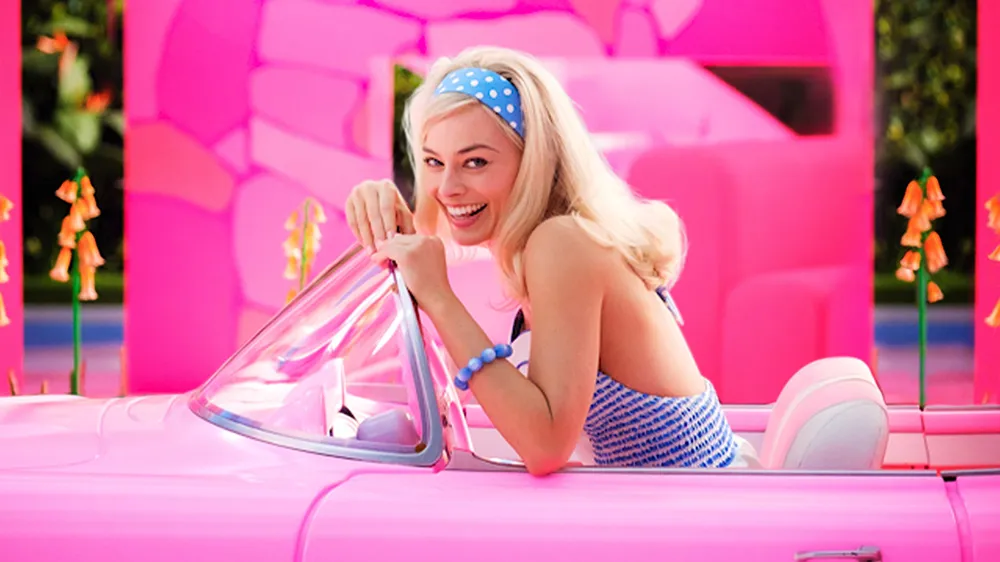
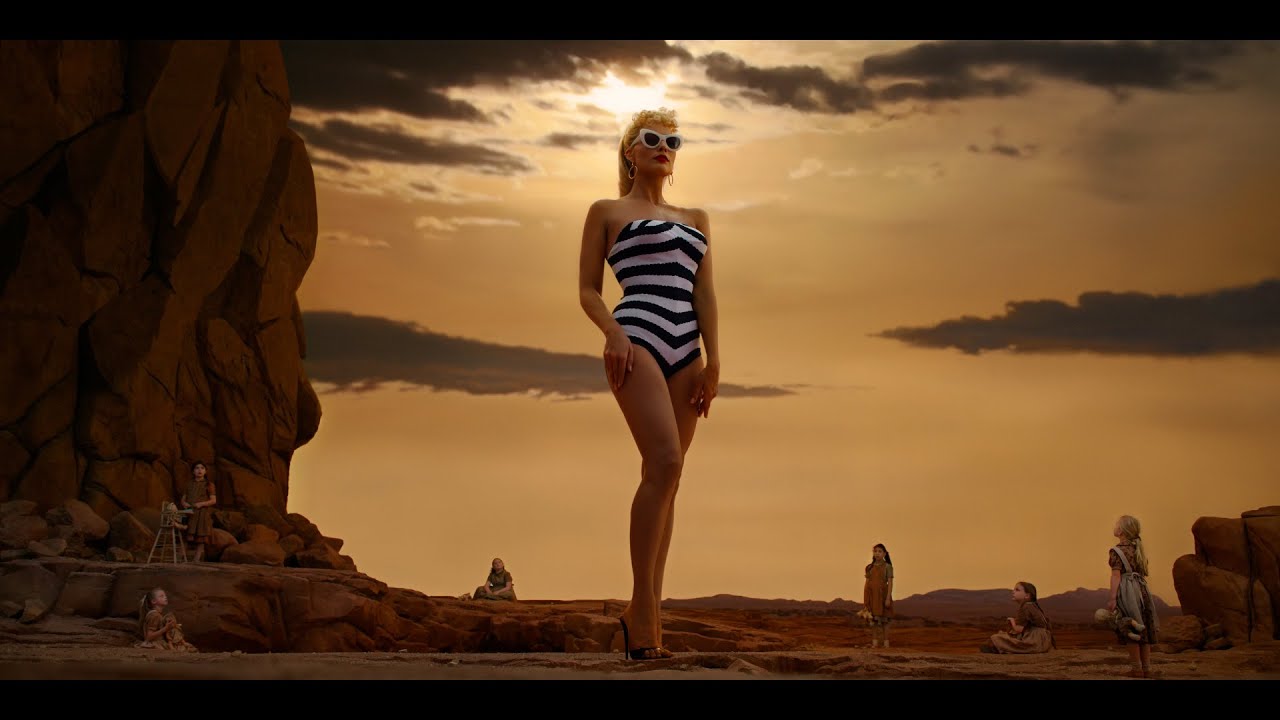
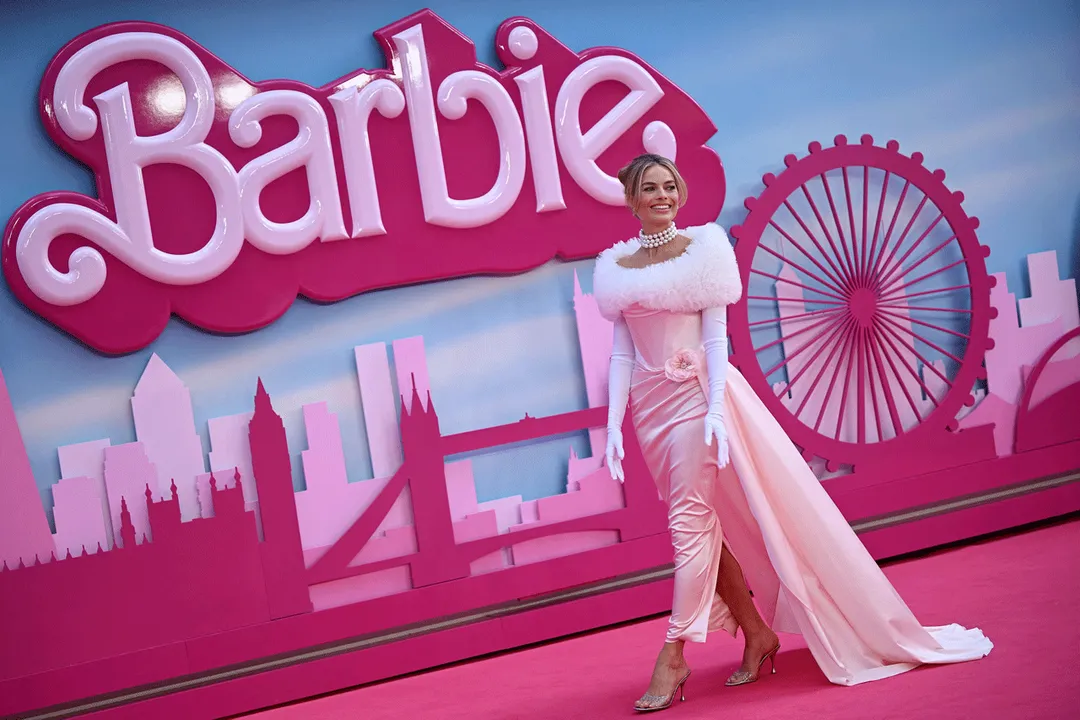
The first crumb dropped in 2022 at CinemaCon. Warner Bros released a single image of Barbie in her Corvette. About a month later, they filmed in Santa Monica where people could take pictures of the lead actors Margot Robbie and Ryan Gosling on the street. Their matching neon multi-color outfits were pretty easy to spot (or hard to miss) in a crowd and sparked tons of intrigue.
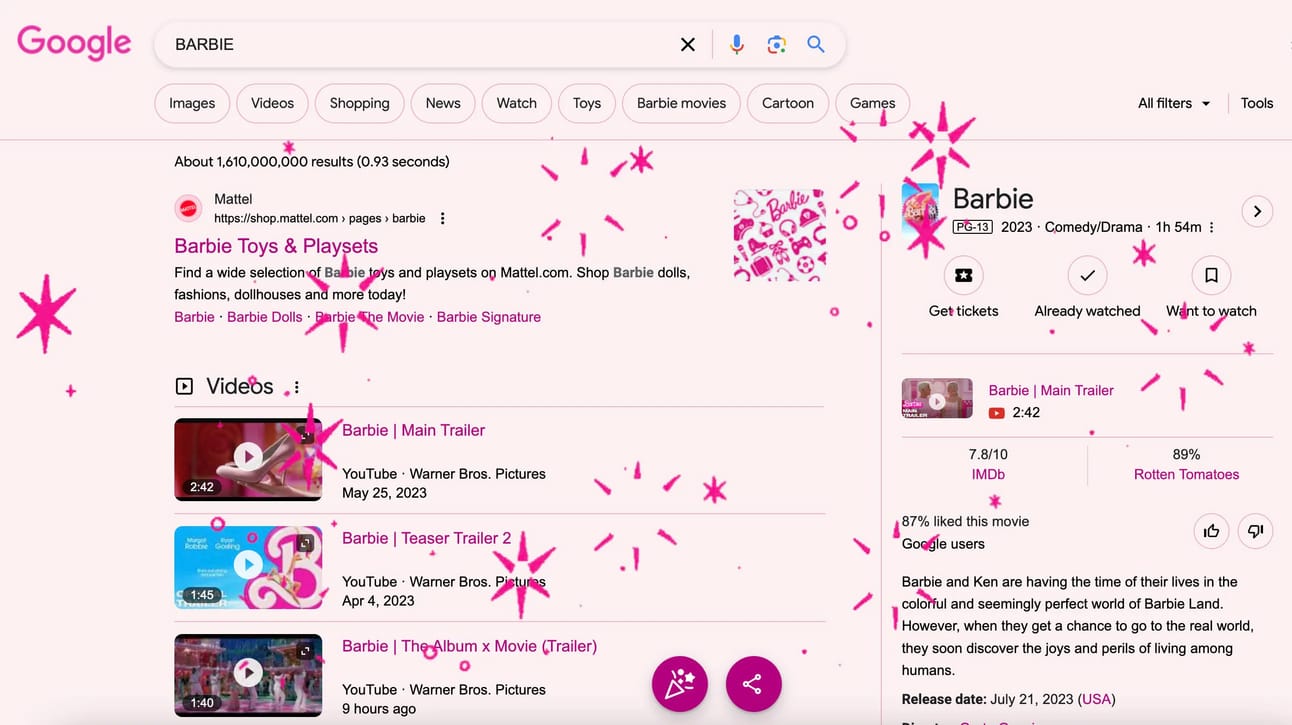
Google got involved with a search feature where sparkles appeared and icons turned pink if a user searched “Barbie”, “Barbie movie”, or “Margot Robbie.” There was a Barbie selfie generator for both Barbie and Ken. And the film had 9 media collaborations including a popup newsletter with the Washington Post called Unboxed.
Warner Bros. connected with both children and adult audiences across demographics—a very intentional move. They featured a racially diverse, multinational cast, and a plot that poked fun at Mattel’s executives with endearing, humorous self-awareness.
To reach this expansive audience, Warner Bros. worked with an estimated $150m marketing budget (on top of a $145 production budget). And they made very deliberate decisions about who they partnered with.
“These partners that you’re seeing across the board, they’re not random. They’ve been a very calculated and precision-based marketing execution,” Mattel president and chief operating officer Richard Dickson said. “It really is a constellation of ensuring that every age—and every category—has best-in-class partners, where you can play Barbie.”
While many elements of the marketing were meticulously manufactured, some of it, like the Barbenheimer phenomenon, happened organically—and really worked in Barbie’s favor.
“In every campaign, there are elements of earned media [like social media buzz] and paid media [such as a trailer spot],” said Josh Goldstine, Warner Bros. president of global marketing. “We believed this brand had the opportunity to generate some exciting earned media. Some of the choices we made stimulated that. Then it did totally take on a life of its own.”
The Results:
Get ready for some spicy numbers because there are… a lot. Barbie was the highest-grossing movie of the year and brought in $1.4b globally in box office revenue. Together with Oppenheimer, it was the fourth-biggest collective box office turnout in history. And it caused a global shortage of hot pink paint.
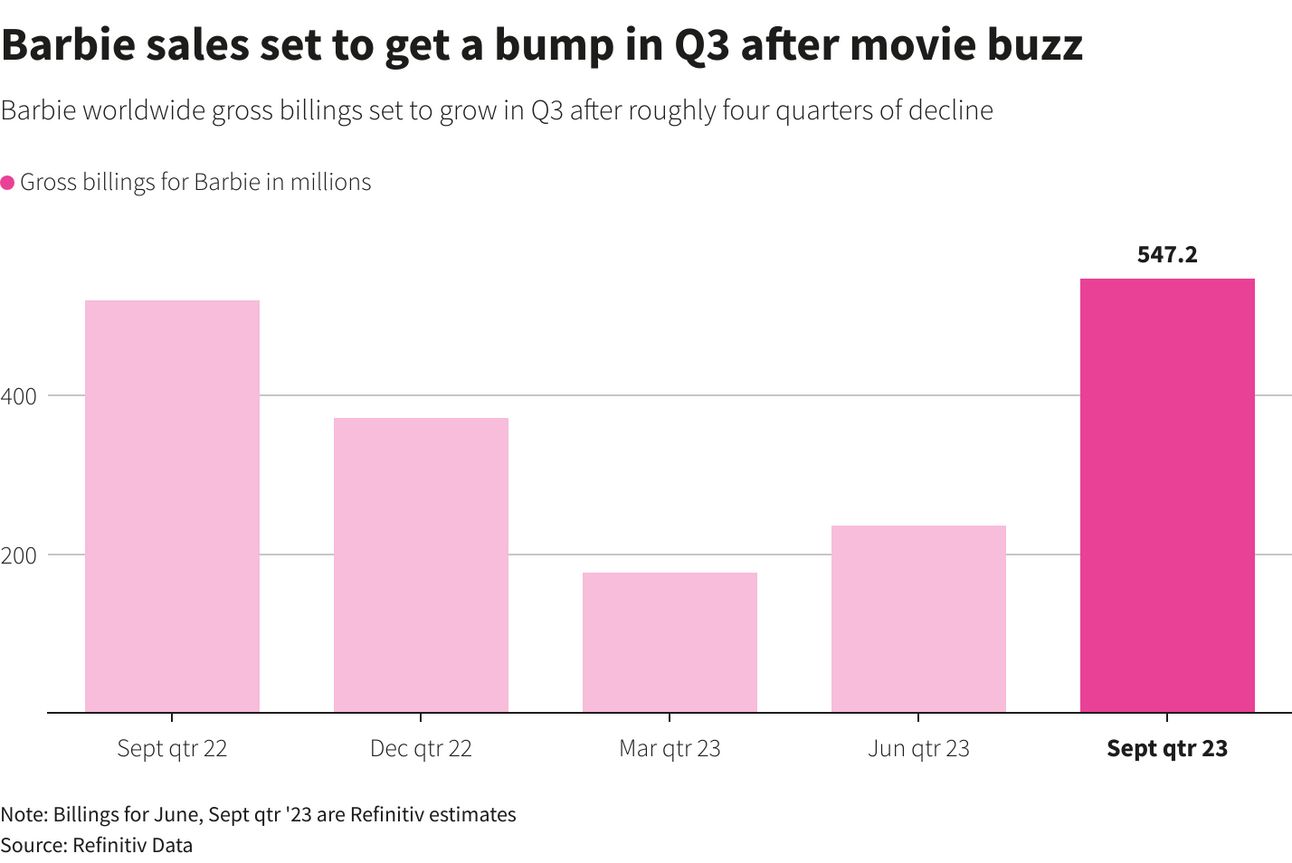
As for toy sales, Mattel reported third quarter revenue of $1.9b, a 9% YoY rise, and a net income of $147m. Barbie doll sales went up 16% in the third quarter of 2023.
Ultimately, the results from the Barbie movie can be split between what’s already happened and what’s to come. As Mattel looks to replicate their Barbie marketing strategy with their other brands, they’ve expressed their goal to evolve from a toy manufacturer to an Intellectual Property (IP)-driven company. With that, they hope to have fans, not just consumers.
Action behind these goals is already being taken. Mattel has a whopping 45 film projects in development, including at least 13 that have been announced publicly (Hot Wheels, Polly Pocket, and American Girl, to name a few).
Interesting side note: on the heels of all this success, Mattel issued an RFP to find a new marketing agency for Barbie. The move is attracting attention and scrutiny within the industry due to factors like a low pitch fee and a restrictive non-compete clause for losing agencies.
The Takeaways:
Most of the media coverage on Barbie is focused on the marketing campaign, not the movie. In many ways, the success of it is fascinating and there’s plenty to learn from it, even if your brand isn’t ready for a featured film.
1. Brands need to evolve
For years, Barbie got feedback about its lack of diversity and concerns over body image. Eventually, Mattel used those insights to inform their products. They created dolls with multiple body types, hairstyles, and skin tones. And the movie cast reflects those shifts.
The world is changing at a pace that no one could have predicted. Marketers need to stay aware of that evolution and ensure their brands follow suit.
Consistently auditing your brand, it’s positioning and core pillars every few years is a very worthwhile exercise.
2. Storytelling is still undefeated
The re-imagination of the Barbie brand would not have had the impact it did without the compelling narratives that were written into the film.
Could that $150m budget have gone into other forms of marketing? Sure. But the medium of film enabled them to tell a long-form story that changed the viewer’s entire relationship and perception of the brand.
3. Partnerships work
Last week we highlighted the various partnerships that propelled the Got Milk? campaign into a viral sensation and the same is true about how Mattel leveraged partners to grow the hype around Barbie.
Forming partnerships that can be mutually beneficial is a cost-effective marketing strategy that can be used by any brand.
Identify the strengths and assets you can bring to a partnership and find teams that would value those in return for opportunities for your team.
Don't miss the next Case Studied™.
Join 40,000+ marketers and receive a breakdown of the world's best brands every week.