A lot of firsts happened at the 2024 Paris Olympics. It was the first numerically gender-equal Olympic Games, with women making up 50% of the athletes. Breakdancing made its Olympic debut with some memorable performances. And this was the first Summer Olympics that held the opening ceremony outside the stadium.
But the milestone that we’ll talk about today is how LVMH became the first luxury brand to be an Olympic sponsor.
This week, Case Studied explores how LVMH took a full-scale, integrated approach to own the 2024 Paris Olympics
The Brief:
It’s important to note the timing of LVMH’s Olympics takeover. Luxury spending was on a downward slope. Global demand had been steadily decreasing and across the board, the luxury sector was faltering. Why? Most fingers are pointed at economic uncertainty, particularly in China, which was responsible for nearly 15% of global luxury spending last year.
Just days before the Paris Olympics started, LVMH’s second quarter earnings were released, revealing that the luxe conglomerate’s sales and revenue was lower than analysts expected. Its sales rose 1% year-over-year, putting it at $20.98 billion euros compared to the $21.6 billion that LSEG analysts expected.
Despite those revenue woes, LVMH invested nearly 1% of its 2023 profits into the Paris Olympics and made itself very visible throughout the competition.
The Execution:
Let’s start with LVMH’s presence at the opening ceremonies—and the outfits. Lady Gaga and her ten dancers were all dressed in Dior during their performance. Aya Nakamura and her dancers, all of whom also donned Dior, were in fits that required thousands of gold feathers to be positioned by hand, one-by-one.
According to LVMH, the major contribution of Dior to the Opening Ceremony was Axelle Saint-Cirel’s outfit. The dress measured over 8 meters long, with colors and skillful drapery that mirrored the French flag. Saint-Cirel sang La Marseillaise, the French national anthem, on the roof of the Grand Palais, with a choir of women who were also donned in Dior.
As the grand finale, Céline Dion performed from the first floor of the Eiffel Tower in a custom Dior gown. To create it, thousands of pearls and over 500 meters of fringe were embroidered directly onto Dion’s body.
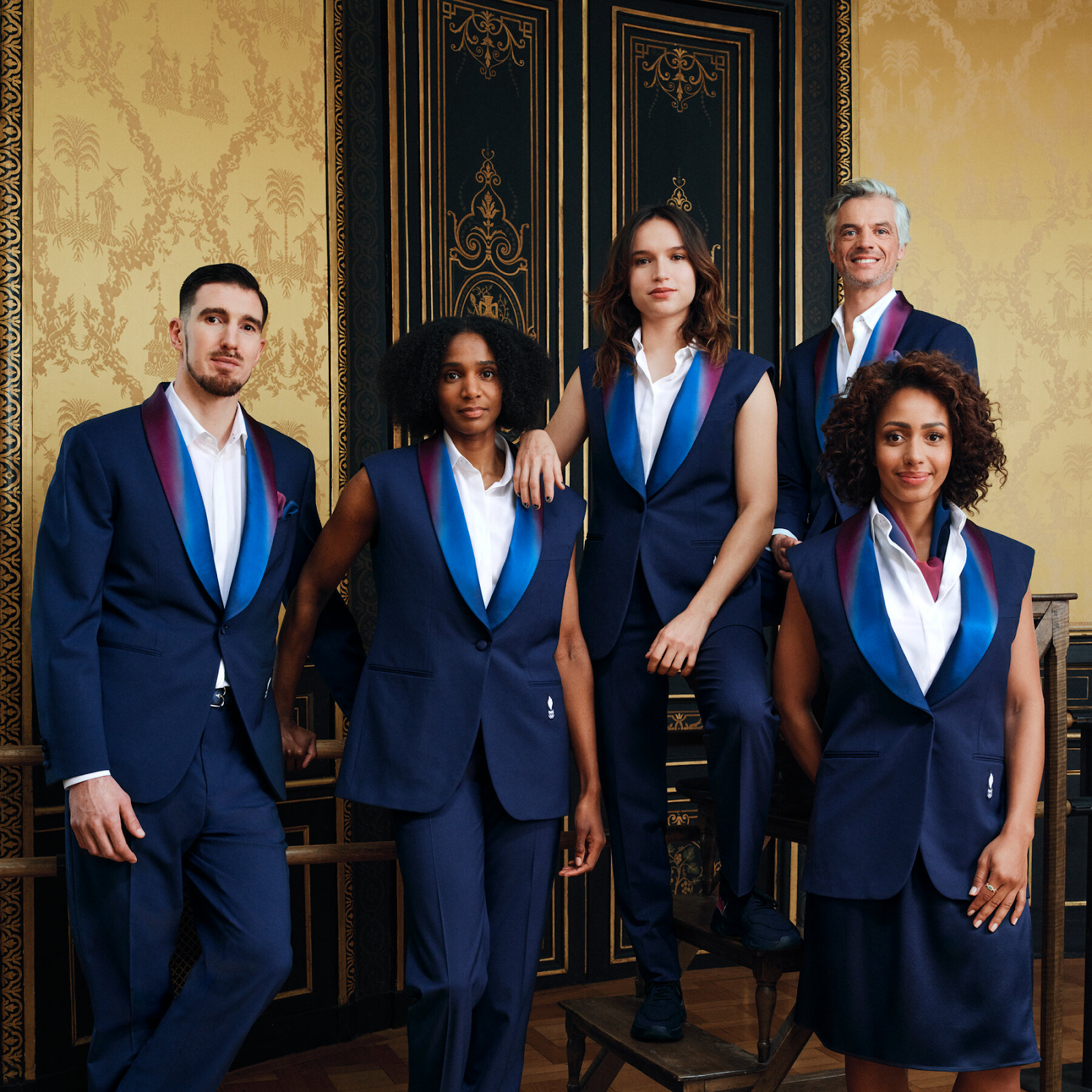
The masked torchbearer dancer Guillaume Diop, rapper Rim’K, and Deaf American Sign Language dancer Shaheem Sanchez were all dressed in Louis Vuitton for their respective performances. Team France athletes and coaches were dressed in custom Berluti fits, including sneakers and loafers.
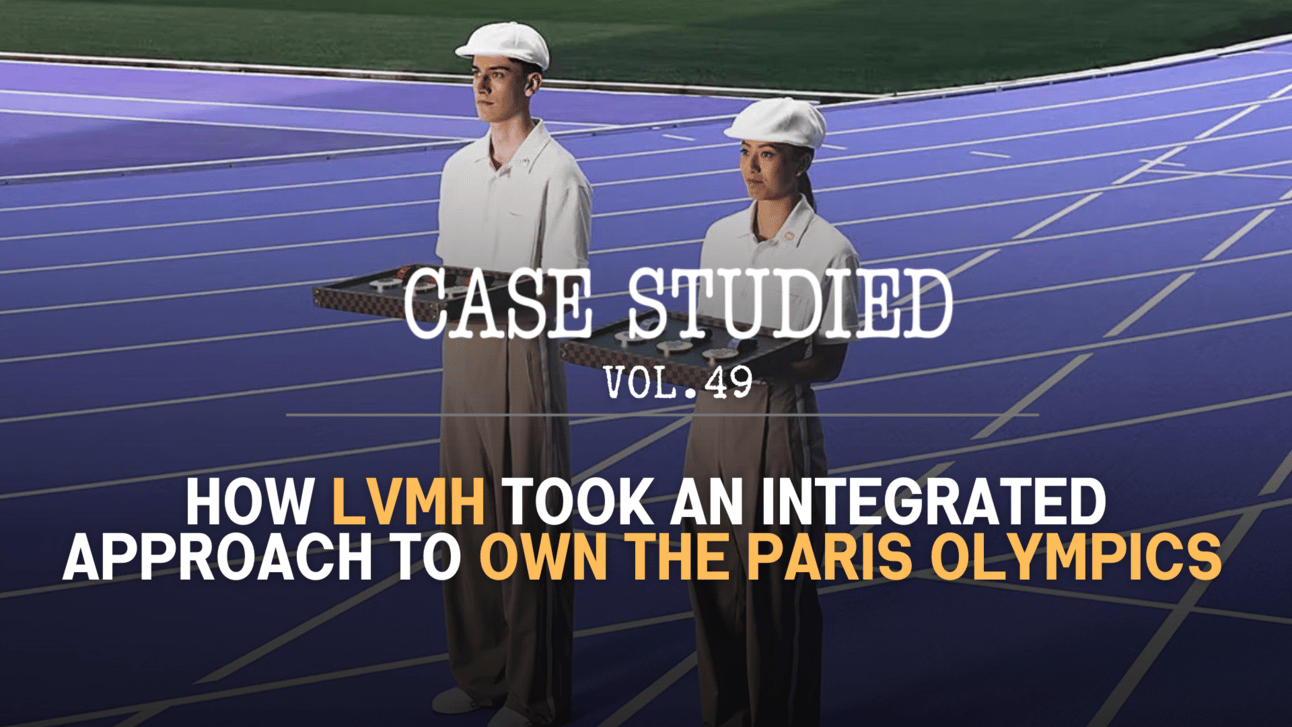
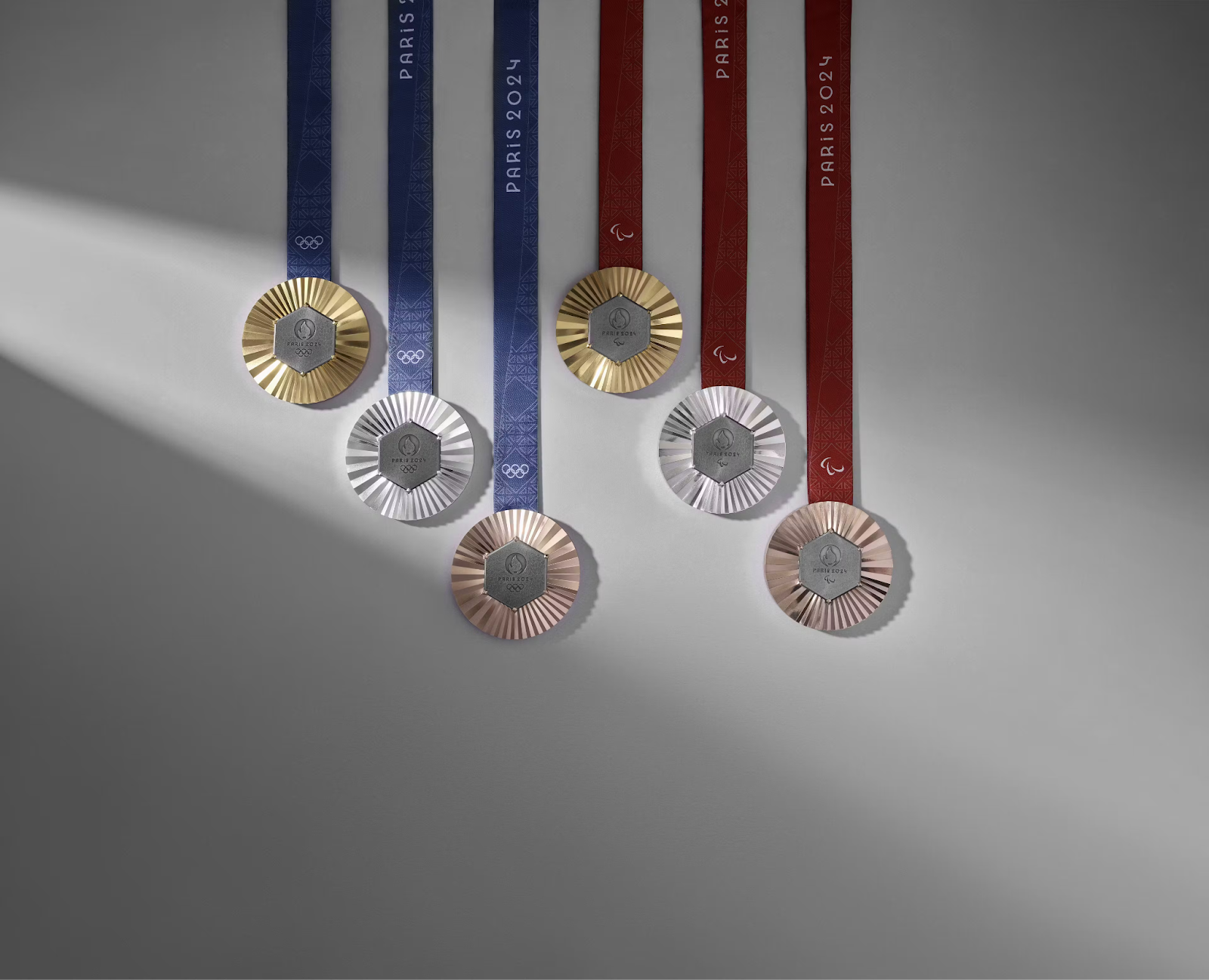
All that was just the opening ceremonies. Beyond that, the Olympics Torch was carried in a Louis Vuitton Torch Trunk during its journey across France. The LVMH-owned jeweler Chaumet designed the olympic medals. There were custom Louis Vuitton trucks made for the medal ceremonies, and even the presentation trays were crafted by LVMH.
Moët champagne was poured to celebrate victories, plus Moët Hennessy “Houses” could be found throughout the games as part of the Olympics hospitality programs. LVMH even created a 3D interactive “microverse” that paid tribute to the athletes sponsored by the conglomerate.
Leaning into its classic air of exclusivity, the group also created “La Maison LVMH”, a pop-up space in a private residence where its customers, partners, and Team France athletes could congregate. They could watch and celebrate performances, have informal meet-and-greets, and even dance to special guest DJs like Zaho de Sagazan.
This summary definitely doesn’t cover every little thing LVMH did to make itself known during the Paris Olympics (we didn’t even mention the Paralympics) but you get the idea—they were out there.
The Results:
So what kind of results did LVMH see after investing roughly $163 million in its Olympics takeover?
According to Relo Metrics, LVMH attained the highest social media value and visibility among Olympics sponsorships, generating 17x more value than the brand’s average social content. Relo pointed out that all social media posts that linked a brand and a national team performed 21x better on average than brand-only content.
The media analytics firm Commetric found that out of 1,333 English-language articles published about fashion’s role in the Olympics, LVMH was the most talked-about company, surpassing Ralph Lauren, adidas, and Nike.
However, the Paris Olympics takeover didn’t seem to have a huge impact on LVMH’s Q3 earnings, which came out yesterday. The luxury giant reported a 3% fall in third quarter sales, marking its first decline in quarterly sales since the pandemic.
But that doesn’t mean the Olympics takeover was a failure—falling demand in China and Japan are playing a major role in the group’s lower-than-expected earnings.
There’s a lot to learn from LVMH’s absolute takeover of the Paris Olympics. Here are a few lessons:
1. Piggy Back on Key Events for Brand Visibility:
LVMH took full advantage of the global spotlight by integrating its luxury brands into every element of the Olympics. From outfitting performers to designing the medals, LVMH was omnipresent, associating its high-end craftsmanship with a prestigious event.
Brands should consider major cultural events as a platform to elevate visibility and embed themselves in memorable moments that resonate with diverse audiences. For smaller brands, even participating in things like tradeshows or working with other brands to offset the cost can move the needle
2. Maximize Engagement through Collaboration:
LVMH strategically dressed iconic performers and athletes in its luxury designs, amplifying its impact through social media and media coverage. Partnering with high-profile figures during widely watched events can exponentially increase brand reach and visibility.
Brands should not only focus on traditional advertising but also utilize collaborations with influencers, athletes, and performers to create authentic, high-value exposure.
3. Invest in Multi-Channel Storytelling:
LVMH’s approach went beyond traditional sponsorship, creating an immersive, multi-channel presence across physical events, social media, and even a 3D interactive microverse. This comprehensive strategy allowed them to reach audiences through various touchpoints.
For brands of any size, it’s crucial to think beyond a single medium and craft a narrative that can span across multiple platforms, reinforcing the message and engaging audiences wherever they are. Often times it is more valuable to invest deeply in one campaign across a variety of touchpoints, then dilute your marketing budget over a number of smaller, one off campaigns.
Don't miss the next Case Studied™.
Join 40,000+ marketers and receive a breakdown of the world's best brands every week.