How Heinz boosted brand loyalty and affinity with an AI experiment
Big name legacy brands tend to lean on emerging tech to stay relevant. Nike started letting customers virtually “try on” sneakers using augmented reality. Patrón held virtual pop-ups in the Metaverse. And in 2022, Heinz conducted an experiment with AI to prove their ubiquity in the ketchup world.
This week, Case Studied explores how Heinz boosted brand loyalty and affinity with an AI experiment.
Presented by Vendry
Tired of running exhausting RFPs and hiring agencies that suck?
Vendry matches you with the perfect performance marketing, design and development agencies by:
Finding you the top agencies in your industr. y
Gathering and vetting proposals & pricing on your behalf.
Connecting you on calls with only the best agencies.
Their team has helped Spotify, Magic Spoon, Upwork, Ripple and 100’s of other brands hire agency partners at no cost to them (they get paid by the agency).
Heinz has been making ketchup for over 150 years. Born in 1869, the Pittsburgh-based condiment company grew and expanded to global status in the 1900s. Then, after a merger between Kraft Foods Group and H.J. Heinz Co. in 2015, the two companies began operating as one under Kraft Heinz, one of the largest food and beverage companies in the world.
Despite its well-established, long standing brand status, Heinz began losing relevance with younger audiences who didn’t feel the same brand loyalty as previous generations. And when Heinz saw its affinity score drop for the first time in years, the brand jumped into action.
Heinz set out to revitalize its connection with consumers and position itself as a contemporary brand. They’d already laid some groundwork. In 2021, Heinz tapped Canadian agency Rethink to run “Draw Ketchup,” where they anonymously asked people in 18 countries to sketch ketchup and most of them drew Heinz bottles (the drawings were then used in OOH ads). That campaign drove 127x publicity versus the initial media investment and a +10% sales lift versus pre-launch.
To keep their momentum going, Heinz took a page from the same book as Draw Ketchup, but with a technological twist.
The Execution:
Heinz partnered with Rethink on the next iteration of their Draw Ketchup campaign. This time around, they had new tools available. It was 2022 and AI image-generating tools were booming in popularity—so the brand decided to leverage it.
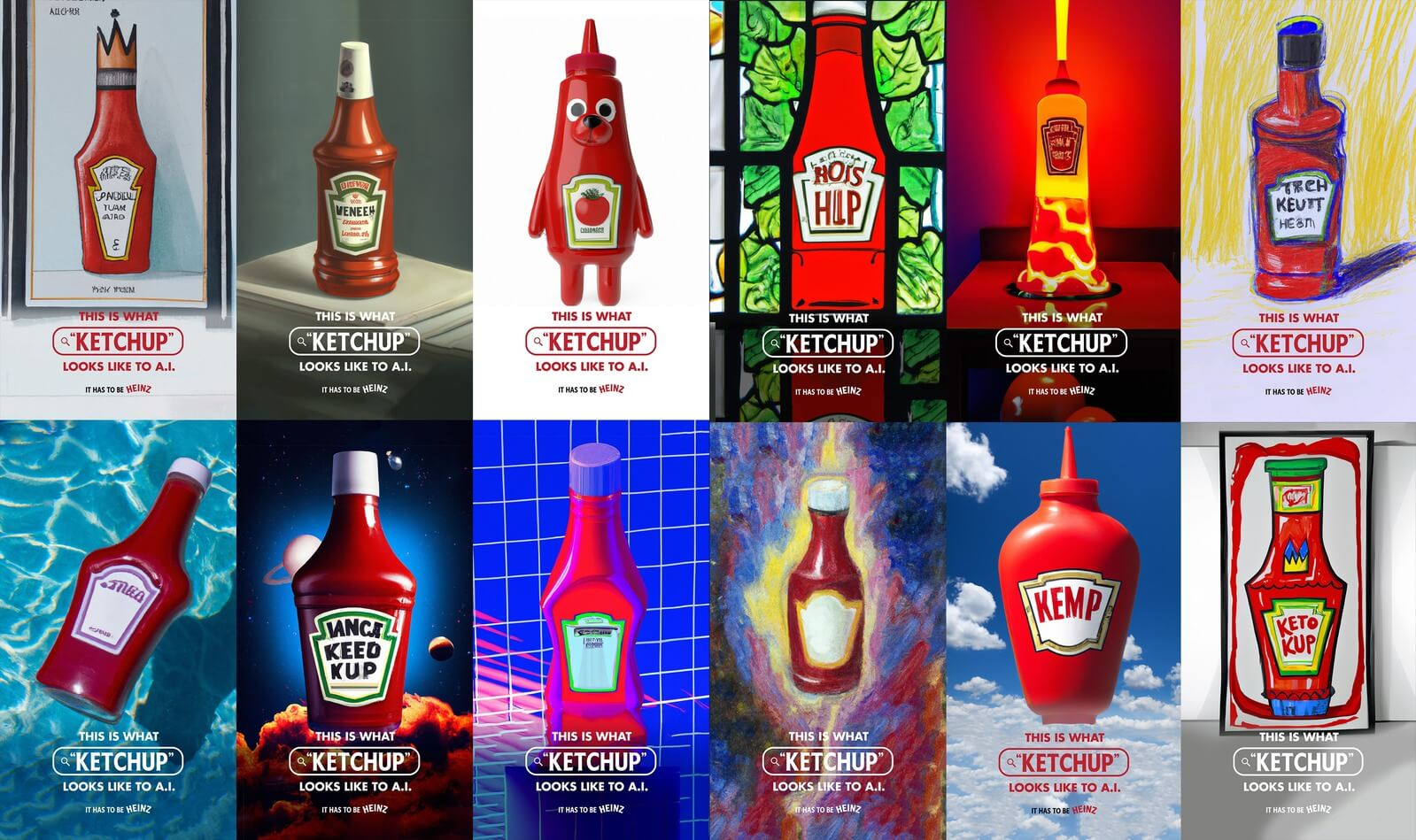
Heinz and Rethink launched an integrated campaign centered around an experiment with DALL-E 2, a new AI image generator that wasn’t available to the public yet. Using different prompts, none of which mentioned a specific brand, they asked the AI a simple question: what does ketchup look like? Each time, it created images with Heinz’s label, bottle shapes, and style.
No matter what the prompt was, something about the image had Heinz characteristics. They created a hero video of the initial results and then took to social media to ask people what prompts they should try next. Responses ranged from “ketchup in space” to “ketchup stained glass” to “Renaissance ketchup bottle.” Even brands like Ducati and Sportsnet jumped in, asking for AI ketchup mashups (think: “ketchup motorcycle”).
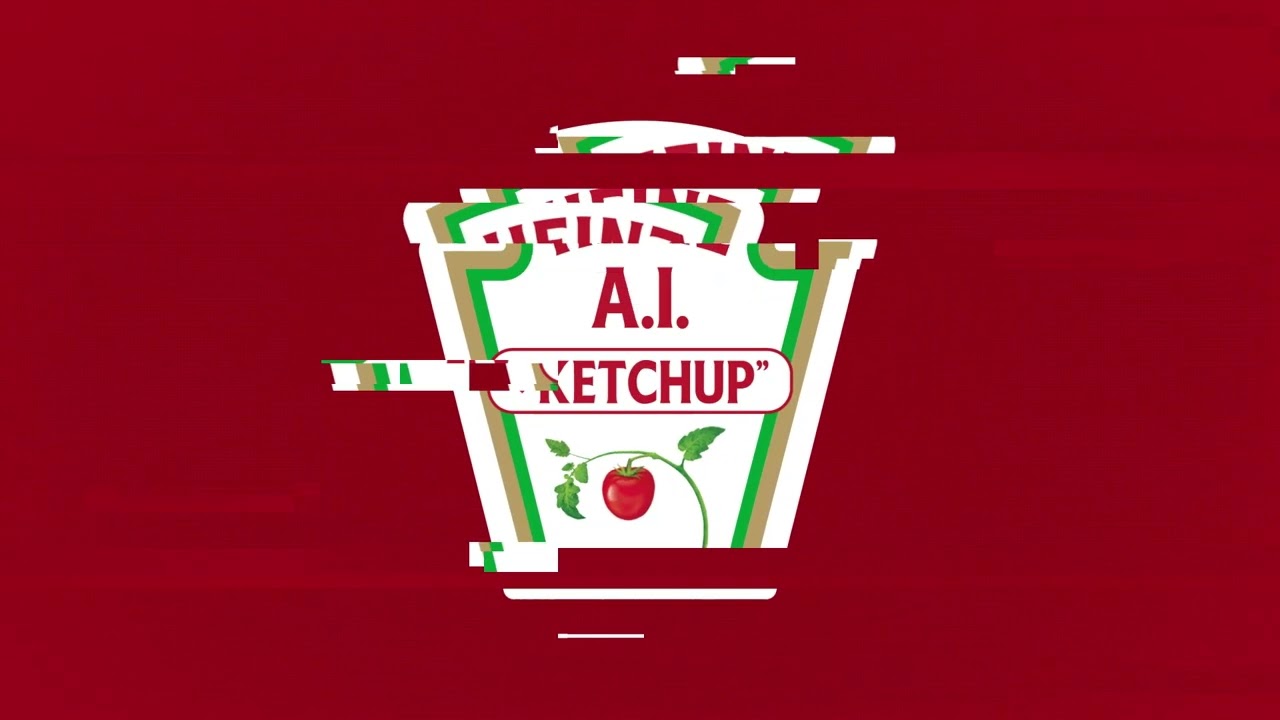
Heinz A.I. Ketchup
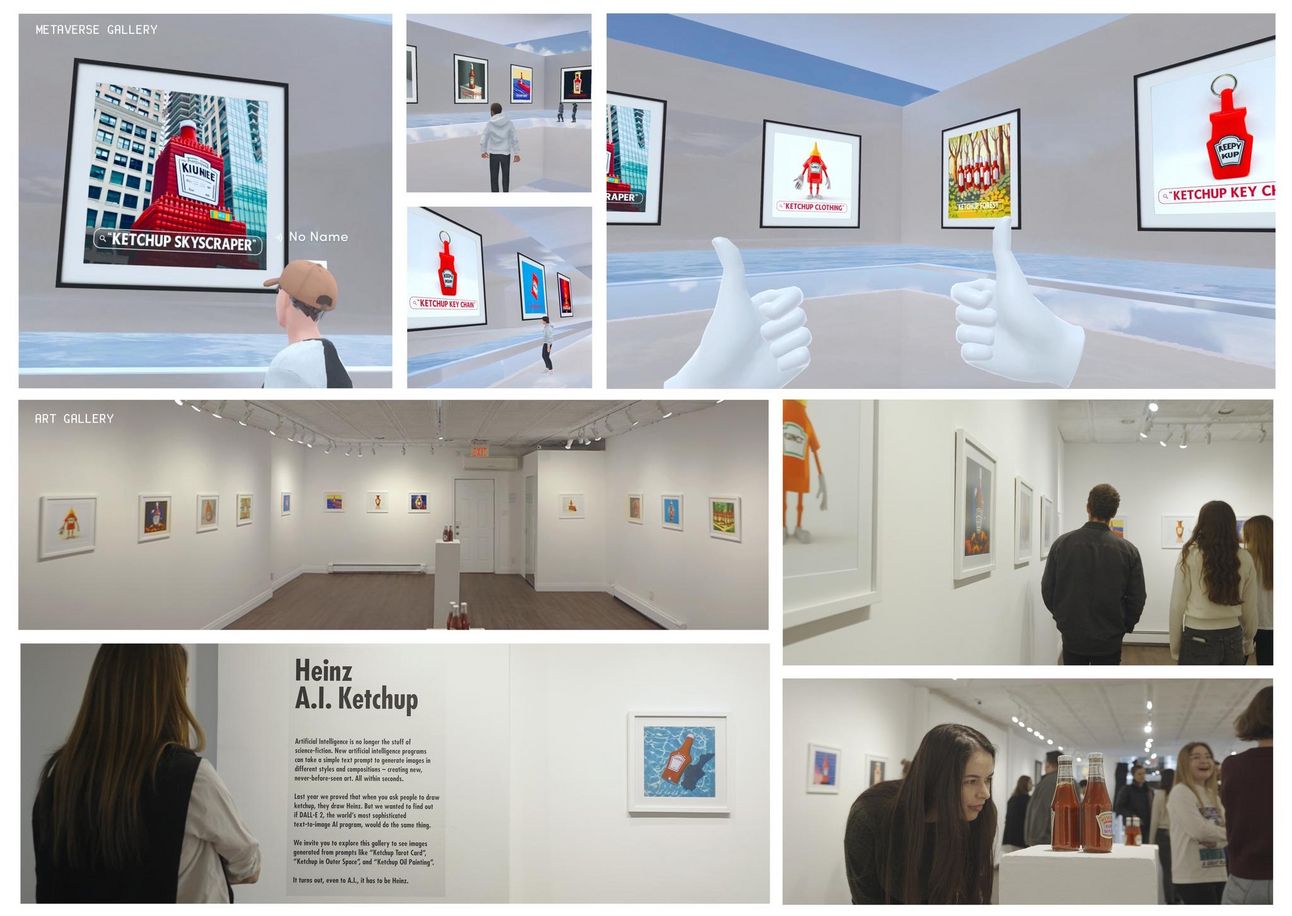
The results created a range of Heinz-inspired art that the brand used in OOH, print, and social ads. Heinz launched two art galleries that showcased the AI images: a virtual one in the metaverse and a real-world one in Toronto, Canada. And they produced a line of special edition Heinz bottles that featured the AI images as the label.
In an interview with The Drum, Rethink’s creative director Zachery Bautista noted the challenges of using such new technology so early on in its development.
“There were certainly some logistical challenges in the sense that, when we started out and even when we pitched the idea to Heinz, the text-to-image AI generators really weren’t what they are today. They were in a sort of infancy. So we had to get access to a beta testing version of DALL-E to start this whole experiment,” Bautista said.
“At the time, it was sort of this grey area of like, what can we use? What can we say to it? How does copyright work with an AI-generated image? That was a bit of a challenge to navigate.”
Free Subscriber Perk
Agency of the Week + Free Audit: Lilo Social
Lilo Social is a Klaviyo Elite agency running retention for some of the fastest growing DTC brands.
Some of the brands they have scaled include True Botanicals, SEEQ, VKTRY, Cheribundi, Public Goods, among others.
Get a free audit today as a complimentary perk of being a Case Studied subscriber.
Launched in Canada and the U.S., the AI Ketchup campaign quickly spread and racked up 1.15 billion earned impressions worldwide, with a significant presence in China, Chile, and Brazil. The campaign was covered by Fast Company, Forbes, and other prominent media outlets, and the earned media it received was worth 2,500% more than the investment
Within weeks, Heinz exceeded its KPIs for earned stories by over 250% and received 100% positive/neutral sentiment. Engagement rates hit 38% higher than Heinz’s past campaigns, per One Club data.
Brand affinity ticked up, with internal Kraft Heinz noting a loyalty bump among 18-to-34-year-olds post-campaign, though exact figures aren’t public. The campaign also had an impact on DALL-E 2—after the campaign, the AI was retrained to reduce brand bias (though that bias served Heinz very well).
Key Takeaways:
Heinz’s AI experimentation offers some key learnings. Here are a few:
1) Iconic brand assets still matter—especially in the age of AI
Heinz didn’t just use AI for novelty—they used it to reinforce their most iconic asset: the ketchup bottle. By asking an AI what ketchup looks like and watching it return Heinz-like visuals again and again, the brand turned their century-old bottle into a contemporary proof point of cultural dominance. It wasn’t just clever. It was a modern brand recall test, and Heinz passed with flying red.
You don’t always need to invent new brand equity—you need to spotlight the equity you already own. If your brand has a distinctive asset (packaging, logo, slogan, sound), think about how emerging tech can reframe it in a surprising way. AI, AR, even social filters—these tools are best used when they amplify something inherently yours.
2) Make Your Experiment Participatory
Heinz didn’t stop at the initial AI test. Once they released the hero video, they invited the internet to play along, crowdsourcing new prompts and even roping in other brands like Ducati. This turned the campaign into a participatory event, not just a passive ad. The result? Mass engagement, viral moments, and earned media that outpaced investment by 2,500%.
When experimenting with new tech or formats, build in hooks for user contribution. Ask your audience to co-create, remix, vote, or suggest. A campaign that evolves in public, with input from fans, feels more like culture and less like marketing. Bonus: you won’t need to manufacture virality—it’ll come to you.
3) Use Emerging Tech to Prove Relevance
Heinz’s AI campaign worked because it had a strategic purpose: reverse declining affinity among younger consumers. The tech wasn’t the end—it was the means to show that Heinz still belonged in the modern cultural conversation. That’s why it worked across media formats and even influenced how the AI itself evolved.
When tapping into new tech, tie it to a real brand challenge. Don’t just use AI, the Metaverse, or whatever’s next because it’s buzzy. Use it because it helps you tell a deeper story about your brand’s place in the world today—and proves to your audience that you get where they’re going.
\
Don't miss the next Case Studied™.
Join 40,000+ marketers and receive a breakdown of the world's best brands every week.