How (and why) the Got Milk? ad campaign became a cultural phenomenon
Case Studied™ is brought to you by Vendry, the easiest way to find & get matched with better agency partners in <7 days. 100% free.
How (and why) the Got Milk? ad campaign became a cultural phenomenon
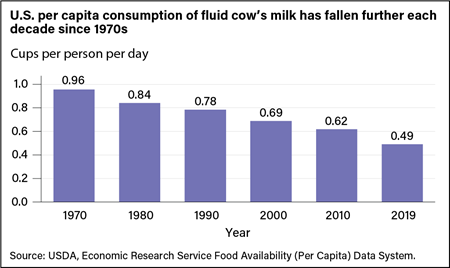
In the early 90s, the milk industry started stress sweating. Milk consumption in the U.S. had declined almost 20% in the previous two decades, down to less than one cup per person, per day.
That might sound like a normal consumption level now but it was a steep drop off at the time. Other beverages were taking milk’s place in America’s diet.
Soft drinks, iced tea, and bottled water were becoming more and more popular, thanks to some well-funded advertising. So the billion-dollar milk industry took a page from the same book.
This week, Case Studied examines how the iconic Got Milk? ad campaigns came to be… and whether it actually worked.
The Brief:
To understand the background of Got Milk?, we have to rewind to the government in the 80s. During the Reagan era, free-market ideology was gaining popularity and legislators began favoring a model that involved taxing farmers to fund advertising campaigns in their industry.
Instead of solving surpluses by having farmers produce less, the idea was to convince consumers to buy more of the product through farmer-funded efforts. They did this through “agricultural commodity checkoff programs”. And these programs were the seed that the Got Milk? campaign sprouted from.
There were two key marketing groups involved in these checkoff programs: the California Milk Processor Board and the Milk Processor Education Program (aka MilkPEP).
Let’s start with the California Milk Processor Board—they hired ad executive Jeff Manning to help give milk a rebrand and save it from being left in the dietary dust.
The budget to do so? $25 million.
Manning partnered with the agency Goodby, Silverstein & Partners to get the job done. The agency began with a focus group where they asked respondents not to consume milk for a week before participating in the study.
The goal was to gather info about milk habits—and they did. One of the participants ended up sharing his experience of getting his cereal ready in the morning and then remembering his oath to not have milk. He admitted to being tempted to have milk and lie to the focus group, and it turned out, others felt the same way. The absence of milk was very noticeable.
The focus group didn’t end there. Goodby, Silverstein & Partners went so far as to empty all the milk from their office refrigerator and install a hidden camera at the back of it. They captured their coworkers' reactions to finding out there wasn’t milk for their cereal or coffee and included it in their pitch to Manning.
And with that insight, the Got Milk? campaign was born.
The Execution:
Goodby, Silverstein & Partners decided to use deprivation marketing in their campaign. Instead of selling the product itself, they sold the lack of the product. This was a stark contrast to the milk campaigns of the 80s that sold the health benefits of milk with taglines like “Milk does a body good”.
By focusing on the absence of milk, they could show consumers how much their diet, food, and routine relied on it.
The first commercial of the campaign was directed by Michael Bay (yes that Michael Bay) who, at the time, was a recent film graduate and went on to direct blockbuster films such as Bad Boys and Transformers.
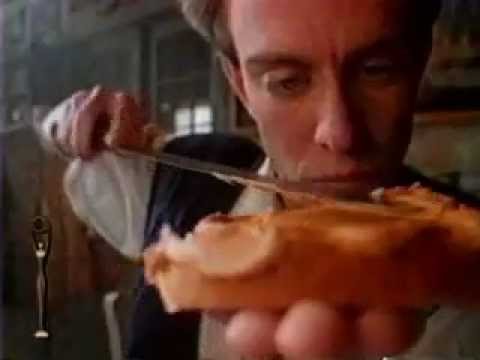
It featured actor Sean Whalen playing a history buff who makes himself a peanut butter and jelly sandwich and then tries to answer a radio show’s $10k history question. The host can’t understand Whalen’s answer because his mouth is full of peanut butter and when he reaches for a carton of milk, it’s empty. The lack of milk meant no $10k prize, even though he knew the answer. The end card was a black screen that showed the words “Got Milk?”
Original "got milk?" commercial - Who shot Alexander Hamilton?
There were over 70 commercials made with that tagline featuring similarly black comedy. Each was odd and dark (sometimes wicked) and didn’t actually reveal the product they were selling until the final moments.
The California Milk Processor Board welcomed collaboration on the campaign from food and non-food brands alike. They licensed the slogan to food brands like Cheerios and Oreo for free, which resulted in Nabisco creating a Got Milk? Oreo. Mattel (the manufacturer of Barbies) and Hot Wheels followed suit with their own Got Milk? toys.
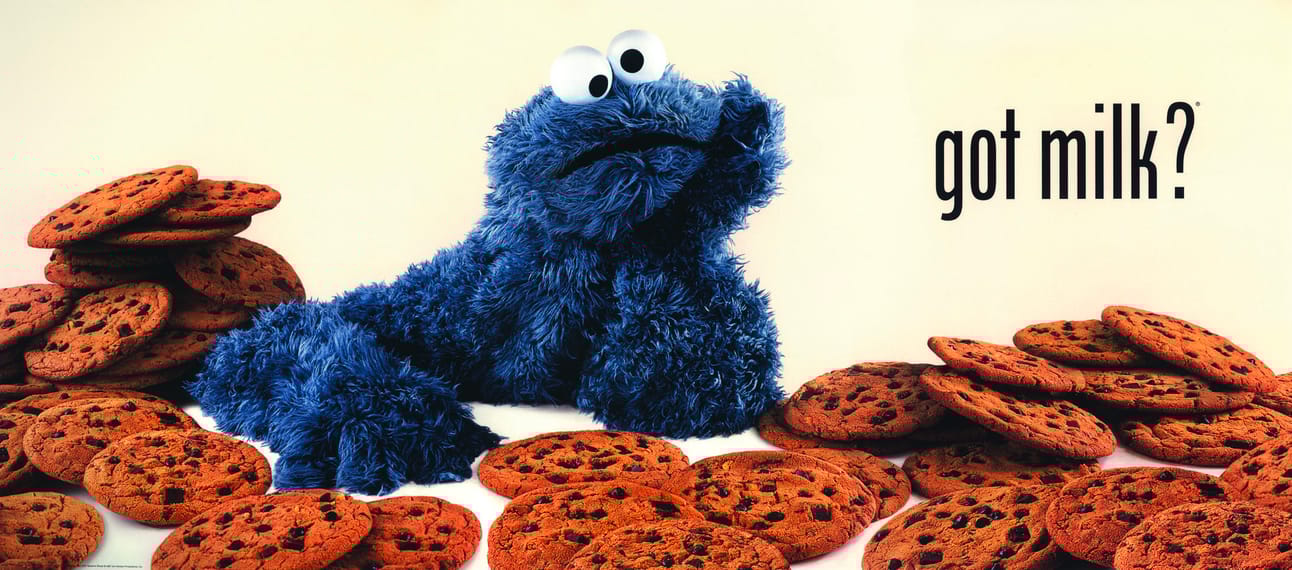
Organizations that don’t even promote brands got involved. Girl Scouts started advertising milk with their cookies in over 300 billboards and thousands of “Got Milk?” badges, marking the first time the organization ever endorsed a product. And Cookie Monster from Sesame Street followed suit after being convinced that Got Milk? wasn’t promoting a brand, but rather a product category.
So we’ve covered the origins of Got Milk?, but what about the famous milk mustache ads? That’s where MilkPEP came in. They partnered with the agency Bozell to create and launch the nationwide milk mustache campaign.
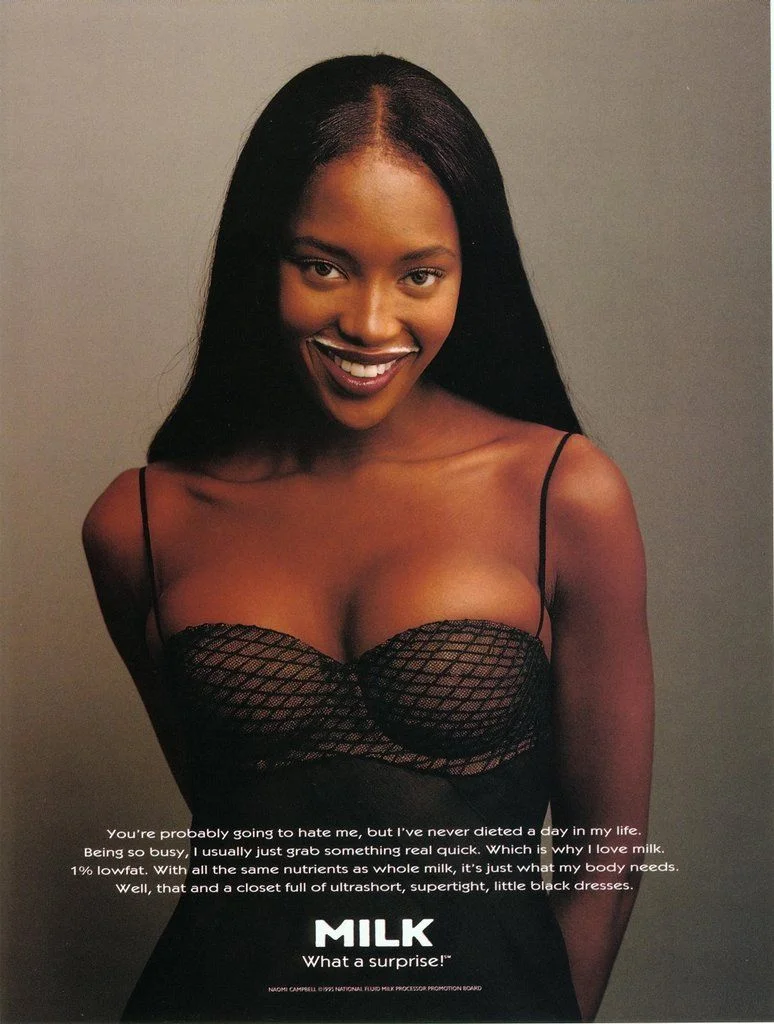
The first print ad featured Naomi Campbell with the tagline “Milk, what a surprise.” But soon, Bozell licensed the Got Milk? slogan and the two campaigns became a joint effort.
Even though they were two sides of the same coin, Bozell took a totally different messaging approach than Goodby, Silverstein & Partners. Research showed that kids viewed milk as a pervasive, boring staple so their messaging was two fold:
📸 make milk interesting by advertising photos of milk-drinking celebrities
📖 educate consumers about the health benefits of milk
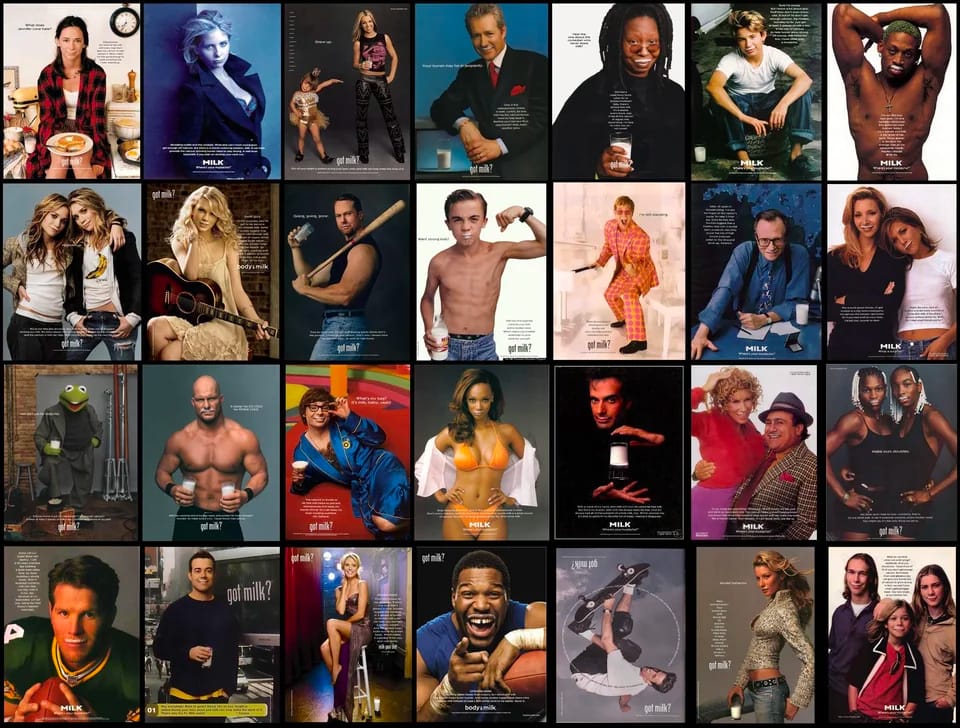
Approximately 350 milk mustache ads ran nationally in print and on TV. They featured celebrities like Joan Rivers, Harrison Ford, Britney Spears, Dennis Rodman, and Kermit the Frog, all photographed with white mustaches made from a “proprietary mix” of milk, ice cream, and sour cream.
It seemed like there was a line of celebrities knocking at the door to get involved in milk’s comeback campaign. Many thought of it as an opportunity to uplift and connect with younger audiences and. To be featured in the campaign, there was just one caveat: you had to be a milk drinker.
The Results:
At the time, an estimated 80% of all U.S. consumers came into contact with the Got Milk? campaign on a daily basis. And many agree that the campaign actually did do the unthinkable: make milk cool.
There’s a running list of the hundreds of the spinoff imitation taglines that cropped up, inspired by Got Milk?: Got Lice? Got Chardonnay? Got teeth? The California Milk Processor Board didn’t bother suing most imitators and the tagline is now public domain.
The awareness and perception of milk certainly shifted because of this campaign but did it actually lead to an increase in milk consumption?
By the time the millennium rolled around, milk’s fate was set. Americans were averaging about two thirds of a cup per day, per person. Meanwhile, sales of other beverages like energy drinks and plant-based milks continued to rise.
The campaign’s tagline may have been more memorable than it was effective. Not many ad campaigns get a eulogy after they’re retired, but Got Milk? did. RIP to the campaign that ingrained this simple, boring product into the cultural zeitgeist.
The Takeaways:
We’re going to wager a guess that you likely don’t work for a special interest group like “Big Milk” and that this campaign feels a bit of a departure from the realities of your job, but that doesn’t mean there aren’t valuable lessons to take from this week’s Case Studied.
Here are three takeaways to consider for your marketing teams:
1. Make simple products interesting
Milk is pretty high up on the list of unsexy products. Even though the product was boring, the advertising wasn’t.
Creatively selling a boring product is much easier said than done. To start, look at your product from all angles, leverage your market research, and bring in creative experts when it makes sense.
Just because your product might be mundane, doesn’t mean your marketing has to be.
2. Customer behaviour is very hard to change
This campaign displayed the importance and challenge of changing consumer behavior in two important ways.
First, the use of observation-based research for both focus group participants and office staff led to the campaign’s core insight, some things aren’t the same without milk. Surveys and other self-reported data collections are great, but nothing provides clarity like visualizing how people interact with products.
Second, even the most amazing marketing might not change people. It’s hard to envision a more impactful campaign for milk and yet it barely moved the needle in terms of consumption. You are much better off inserting your products into existing customer behavior than trying to get customers to change to suit your product.
3. Hand partners the reigns
One of the most interesting components of the Got Milk? story is the decision to let virtually any organization license the campaign and use it for themselves, without being charged (or sued!).
While it’s now commonplace to see brands like Star Wars, NFL and Marvel licensed on 1000’s of different products, the cost to do so is by no means cheap.
By letting their partners leverage the Got Milk? campaign, their marketing benefited from additional reach and clout at no cost.
Don't miss the next Case Studied™.
Join 40,000+ marketers and receive a breakdown of the world's best brands every week.