Food stylists use all kinds of tricks to make food look perfect in marketing photos. Some say they’ve used hair styling cream as milk in cereal, sprayed WD-40 to make food glisten, and applied spray-on deodorant to make soda cups look icy cold.
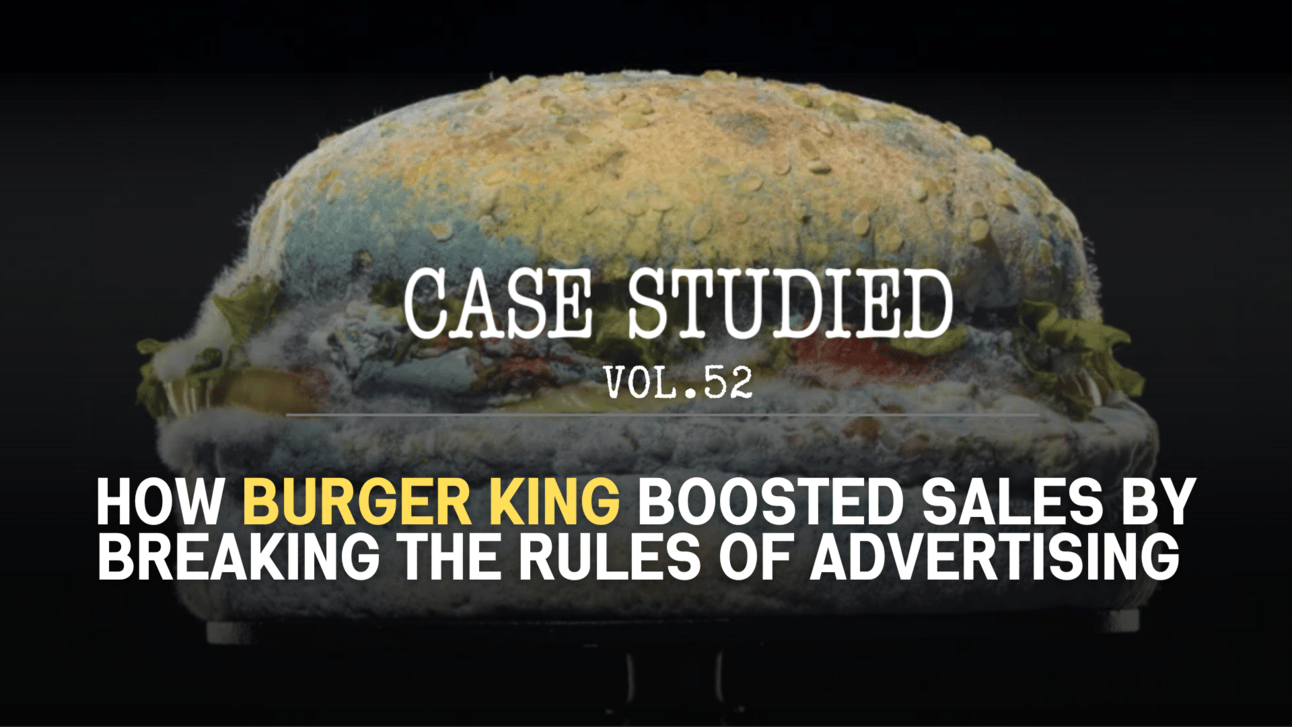
Burger King took a different route. Instead of making photos of their Whopper look perfect, they look close up photos of what it looks like after a month—when it’s covered in mold.
This week, Case Studied explores how Burger King boosted sales by breaking the rules of advertising.
The Brief:
It’s typical for fast food to contain all kinds of additives—artificial colors, flavors, preservatives. But Burger King’s parent company, Restaurant Brands International, announced that it was removing all of those from its signature sandwich, the Whopper.
To draw attention and awareness to this shift, Burger King took a surprising take on a global, integrated ad campaign.
The Execution:
Burger King partnered with Ogilvy on their moldy Whopper campaign. The concept was bold so the ads themselves were simple.
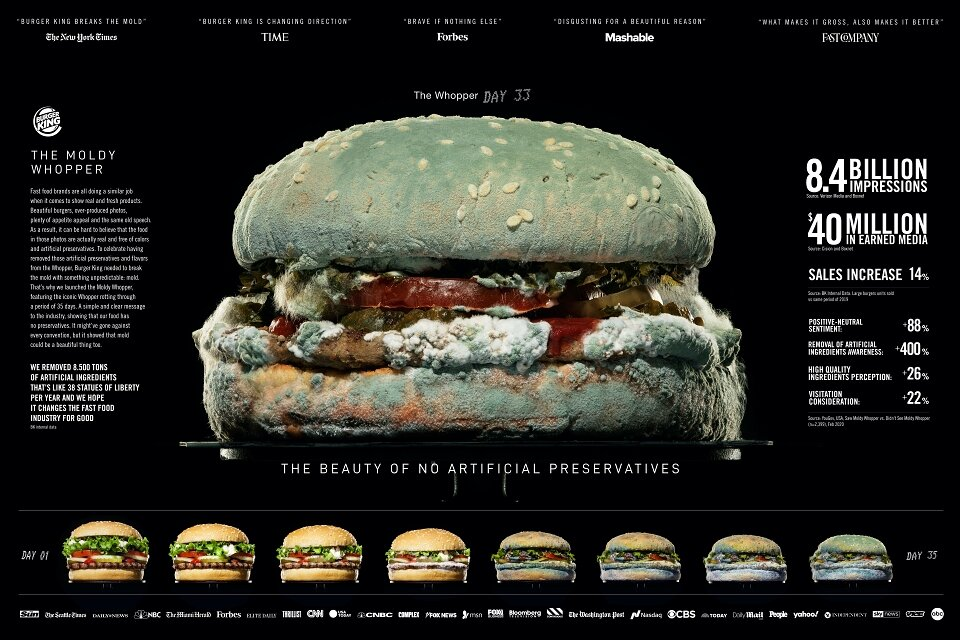
Instead of presenting the product in the most appetizing, mouth-watering way, Burger King’s ads showed what the Whopper looked like after several weeks (up to 35 days).
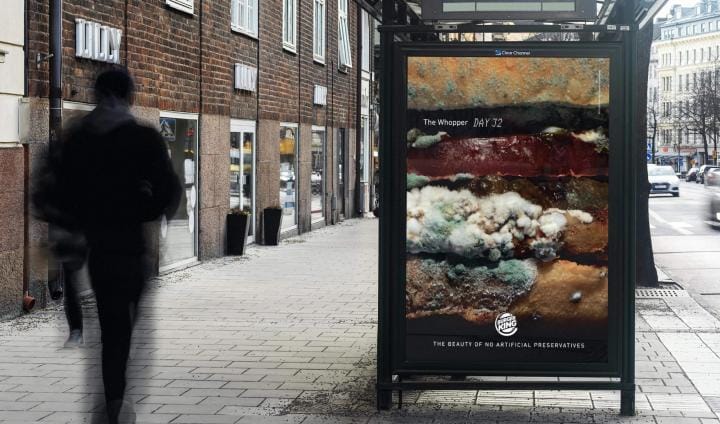
The ads featured close up shots of mold growing in all different colors and shapes, with copy that simply says, “The beauty of no artificial preservatives.” The campaign included a 45-second film, OOH ads, plus press and digital ads around the world.
The Results:
The reaction to Burger King’s ads was strong. Some reactions were positive, praising the brand for its creative, eye-catching announcement that went against the grain. Some reactions were negative, criticizing the campaign for being too focused on entertaining marketers who likely won’t convert into customers.
Regardless of this chatter, Burger King came out on top. Sales increased by 14%, the campaign earned 8.4 billion impressions, and it had an earned media value of $40 million. Positive sentiment increased by 88%, visitation consideration got a 22% boost, and the perception of high quality ingredients increased by 26%.
For their work on the campaign, Ogilvy won Gold for Creative Effectiveness at the Cannes Lions International Festival of Creativity.
The Takeaways:
There’s a lot this rebellious campaign can teach us. Here are a few lessons:
1. Embrace Imperfection
Burger King’s Moldy Whopper campaign turned traditional food marketing on its head by embracing raw, unappetizing visuals. By showcasing a Whopper naturally deteriorating over a month, they highlighted the absence of artificial preservatives. This strategy was bold and unexpected, capturing attention by breaking away from typical “perfect” food imagery.
Brands can harness this “anti-perfection” approach to stand out in saturated markets, especially when promoting transparency or product integrity. By showing real, unedited visuals, companies can create a unique, authentic connection with audiences, fostering trust in an era where consumers crave authenticity.
2. Turn Heads with Shock Value
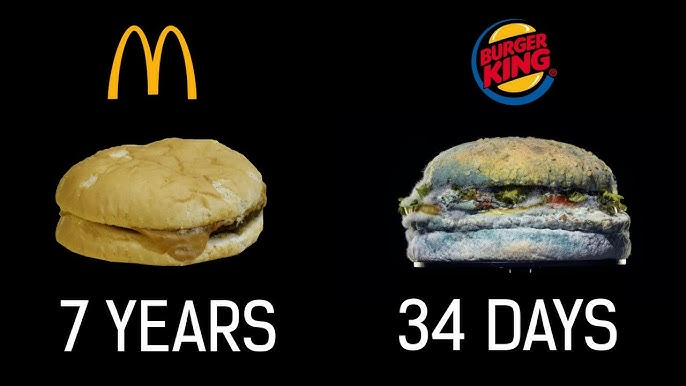
Burger King’s choice to show a moldy Whopper was shocking but calculated. By displaying an imperfect, decayed product, they defied the norms of fast-food advertising, where idealized imagery usually reigns supreme. This stark contrast drew significant media attention and social discourse, highlighting the brand’s commitment to removing preservatives, damaging their competition’s image in the process.
Shock value, when thoughtfully applied, can be a powerful marketing tool. Brands seeking to communicate bold changes or reinforce transparency can benefit by pushing boundaries. Done right, this can translate into valuable media coverage and lasting impressions that drive both awareness and credibility.
3. Positioning as the Hero
Burger King’s Moldy Whopper campaign positioned the brand as a champion of transparency and quality in an industry often criticized for artificial ingredients. By boldly showcasing the natural decomposition of its preservative-free Whopper, Burger King effectively cast itself as the hero challenging industry norms. This campaign wasn’t just about promoting a product; it was about taking a stand, setting Burger King apart from competitors still relying on artificial preservatives.
Brands can use this “hero” strategy to differentiate themselves by highlighting values and practices that counter industry conventions. By positioning themselves as the ethical or health-conscious alternative, companies can appeal to consumers who are increasingly aware of and concerned with product integrity. When done thoughtfully, this positioning not only builds brand loyalty but also reinforces the brand as a leader and advocate for positive change in its field.
Don't miss the next Case Studied™.
Join 40,000+ marketers and receive a breakdown of the world's best brands every week.