A big week for bold moves
Brands, billions, and a few big swings
30 Apr 2026
A big week for bold moves
Brands, billions, and a few big swings

Case Studied Brief
April 30, 2026

Case Studied Brief
Gaga, Doechii, Oprah, and Google's $40B check
This week's Brief covers bold brand collaborations, billion-dollar AI bets, and a few industry moves that signal where everything is heading.
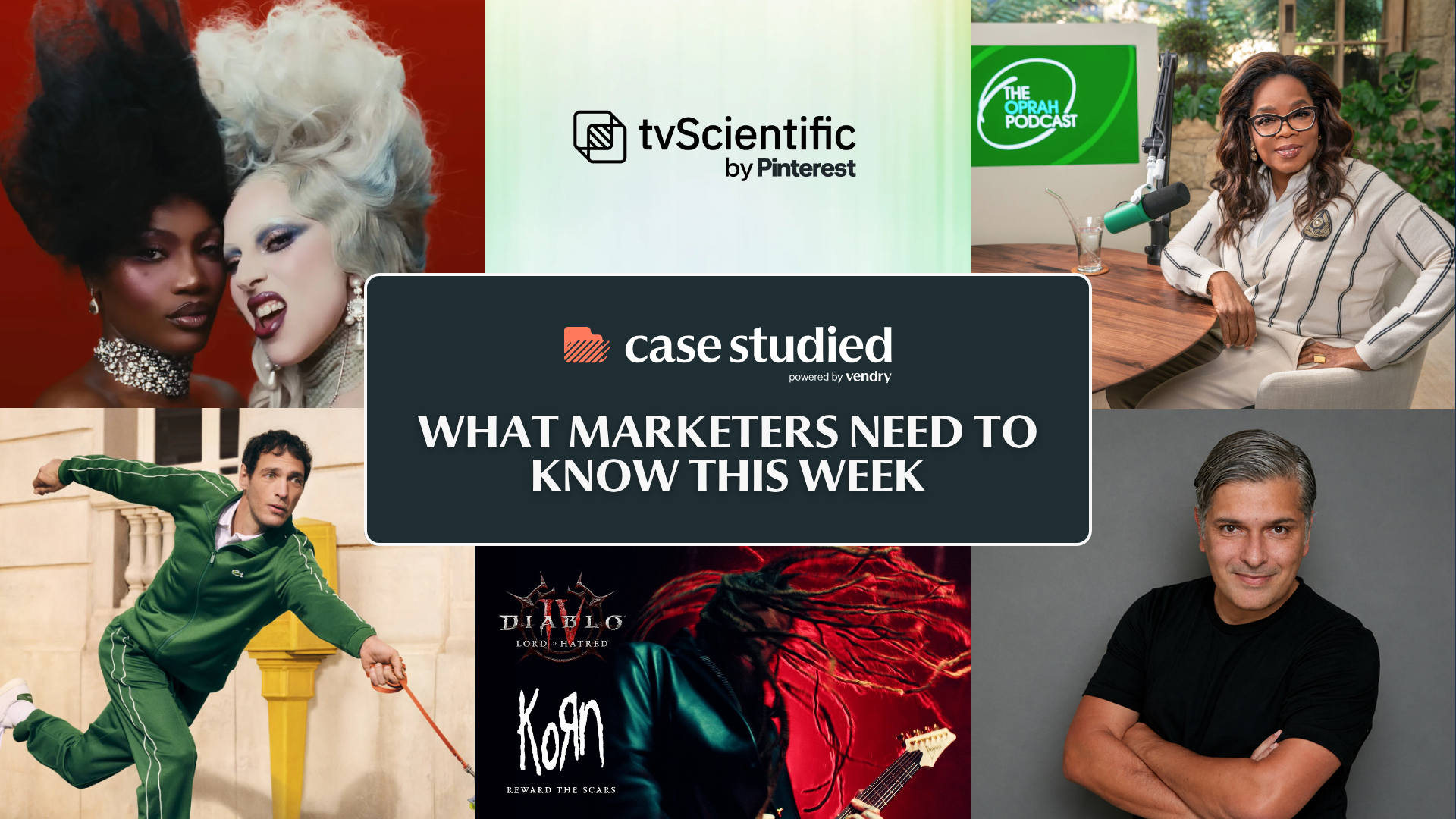
The Devil Wears Prada 2 got a music video for its lead single. Lacoste rebuilt its identity from the archives. And Blizzard pulled Korn out of a four-year silence to launch a video game.
Meanwhile, Walmart launched a streaming ad marketplace, Google wrote Anthropic a $40 billion check, and Oprah struck a multiyear licensing deal with Amazon.
Here's what you need to know.
Campaigns of the week 📺
Devil Wears Prada 2
Two icons, one film
Lady Gaga and Doechii released the official music video for "Runway", the lead single from The Devil Wears Prada 2 soundtrack. Directed by Parris Goebel and co-produced by Bruno Mars, the video features an explosion of custom couture and precise choreography. The track blends house, hip-hop, and ballroom influences. Commercially, it hit No. 1 on Billboard's Dance Digital Song Sales chart, ranked in the Top 50 of the Hot 100, and charted internationally across the UK, Canada, Australia, Japan, and New Zealand.

Why it stood out: “Runway” is a creative collaboration between two artists at the top of their game, timed to one of the most anticipated films of the year. In its music video, each creative decision seems to pull double duty. The fashion houses featured in the video extend the reach into the film’s industry themes and the Parris Goebel direction gives it a distinct visual identity. Her work also has a history of going viral. Goebel choreographed Justin Bieber’s “Sorry” video, which became one of the most viewed videos on YouTube.
📖 Read more: Rolling Stone
Made By Dyslexia
A charity hacked Google's front page
Working with Clemenger BBDO, the global charity Made By Dyslexia set out to change the negative connotations kids and parents see when they search, "What is dyslexia?" Most Google search results use language like "lifelong learning disorder" and "word-blindness." To change that, Made By Dyslexia created a film titled What is Dyslexia? The animated short follows a young girl named Lola who discovers that her dyslexia is a strength, not a limitation. By naming the film after the highly searched phrase, it earned a Google Knowledge Panel that pushed it to the top of search results globally. The film premiered at the BFI IMAX in London and is featured on the YouTube Kids homepage.
Why it stood out: Rather than fighting the algorithm with ad spend, Made By Dyslexia found a way to make the algorithm work for them. Clemenger BBDO helped the campaign earn the Knowledge Panel with critical decisions like casting, animation style, reviews, and distribution. It's a strong example of how purpose-driven work can be both emotionally powerful and tactically effective.
📖 Read more: Little Black Book
Blizzard Entertainment
Nu-metal found its final boss
To launch the final expansion of the video game Diablo IV: Lord of Hatred, Blizzard teamed up with agency 72andSunny and nu-metal legends Korn. The centerpiece of the campaign is the song "Reward the Scars," the band's first new music in over four years. An animated music video blends Korn's live performance with Diablo IV-inspired visuals. It debuted live at the Sick New World festival before dropping alongside the expansion. The track was adapted from an existing unrecorded song the band had been developing, with frontman Jonathan Davis noting the title reflects the game's core loop: grinding through brutal encounters to earn high-tier rewards.

Why it stood out: This is what authentic brand collaboration looks like. Davis has played Diablo for years, so the partnership felt as natural as ever. For Blizzard’s part, they didn't just license a song—they pulled a legendary band out of a four-year hiatus to create something original. The collaboration created a buzzy moment for both the game and the band.
📖 Read more: AdAge
Lacoste
A rebrand built from the archives
Lacoste unveiled a refreshed visual identity alongside the revival of its Life is a Beautiful Sport campaign, which originally launched in 2014. Directed by Fredrik Bond, the film reframes sport as a lifestyle with Novak Djokovic making a special appearance at Roland Garros (where Lacoste has been a partner for 55 years). The visual refresh pulls directly from the brand's own history. The updated crocodile returns to Robert George's original illustration, the typography revives René Lacoste's handwritten script, and the iconic green returns to its original shade. Nothing was reinvented, everything was just refined.

Why it stood out: In an era where rebrands often mean starting from scratch, Lacoste did the opposite. Going back to the founder's handwriting and the original illustrator's crocodile signals that the brand's heritage is the asset, not the obstacle. It’s an interesting example of a legacy brand that opts to lean into its roots rather than wiping the slate clean with modernization.
📖 Read more: Sports Illustrated
Industry news 🤝
Chipotle's new brand chief has a big résumé
Chipotle appointed Fernando Machado as Chief Brand Officer, effective June 1. Machado brings one of the most decorated marketing track records in the industry. He spent over seven years as CMO at Restaurant Brands International across Burger King, Popeyes, and Tim Hortons, and 18 years at Unilever. Machado was named Ad Age's CMO of the Year in 2020 and ranked among Forbes' top three most influential CMOs globally. In his new role, he’s tasked with leading global marketing strategy, brand positioning, and customer engagement as Chipotle pushes its “Recipe for Growth” strategy and expands internationally. Alongside the hire, the chain also named Arlie Sisson to a newly created Chief Digital Officer role to accelerate its technology and loyalty strategy.

What it signals: When a brand of Chipotle's scale goes out and hires someone with Machado's pedigree, it's a sign that brand-building is back at the top of the priority list. After years of leaning heavily on digital and loyalty mechanics, this hire suggests Chipotle is ready to invest in the kind of culturally resonant, category-defining marketing that Machado is known for. The fast-casual competition is heating up and Chipotle just brought in major reinforcements.
📖 Read more: Chipotle Newsroom
Roku's new ad play: your purchase data, their inventory
Roku unveiled Roku Curate, a new advertising offering that bundles premium streaming inventory with first-party purchase and browsing data from a network of major retail partners. The roster includes Best Buy, Instacart, Kroger, Fandango, Criteo, and Fetch. Roku Curate gives advertisers a way to target connected TV audiences based on real shopping behavior and then measure whether those ads actually drove purchases downstream. Best Buy brings electronics shopper data, Instacart contributes consumer grocery purchasing signals, Kroger adds retail purchase data, and Fandango connects entertainment discovery and ticket-buying behavior. Roku is positioning the offering as a direct, transparent alternative to programmatic buying. The launch comes as more marketers push back against opaque programmatic pipelines and demand clearer lines between ad spend and business results.

What it signals:This is retail media and CTV colliding in a way that could impact how brands plan and buy media. Roku is essentially building the bridge between what someone watches and what they buy, creating a closed-loop measurement system that TV advertising has historically lacked. As retail media networks continue to expand beyond the digital shelf, the streaming screen is becoming the next major battleground for purchase-driven advertising.
📖 Read more: Variety
Oprah just chose Amazon over everyone else
Oprah Winfrey's Harpo Entertainment signed a comprehensive multiyear deal with Amazon. It gives Wondery—aka Amazon's celebrity-focused podcast network—exclusive distribution and advertising rights to The Oprah Podcast across both audio and video. The deal also hands Amazon the rights to all 25 seasons of The Oprah Winfrey Show, plus her Oprah's Book Club and Oprah's Favorite Things franchises. It will all be integrated across Amazon's retail and content ecosystem. Starting in July, the podcast will be available across Prime Video, Amazon Music, Fire TV Channels, and Audible, while also remaining on YouTube and major podcast platforms. As part of the agreement, the podcast expands from weekly to two new episodes per week. Oprah joins a growing Amazon stable of celebrity-led shows that includes New Heights with the Kelce brothers, Armchair Expert with Dax Shepard, and Baby, This Is Keke Palmer.

What it signals: By bundling Oprah's podcast, her back catalog, her book club, and her Favorite Things franchise into one deal, Amazon is acquiring one of the most trusted and commercially powerful personal brands in media history. For marketers, Oprah's audience is a rare combination of scale, loyalty, and purchasing intent. Wherever she goes, brand opportunities follow.
📖 Read more: New York Times
MarTech moves 🤖
Pinterest just followed you to your TV
Pinterest launched its first-ever audience extension offering on connected TV. It allows advertisers to target the platform's 600 million monthly active users on third-party CTV properties for the first time. The move is powered by tvScientific, which Pinterest acquired earlier this year for a reported $300-$350 million. It also marks the social platform's debut as a cross-screen advertising player. Advertisers can target Pinterest audience segments using both deterministic and probabilistic methods. Early tests showed that combining Pinterest's first-party data with tvScientific's AI improved advertiser outcomes by 27%. The offering is already integrated with all major supply-side platforms, giving it immediate reach across the CTV ecosystem. Pinterest executives noted at the POSSIBLE conference in Miami that the platform's audience skews toward high-intent shoppers, particularly Gen Z, making the CTV extension a natural step toward full-funnel performance marketing.

What it signals: Pinterest has always been the intent-rich underdog of social platforms. People go there to plan, save, and shop (not just scroll). By extending that audience into CTV, Pinterest is making a credible play for performance budgets that have historically gone elsewhere. For media buyers, this opens up a new cross-screen targeting layer built on genuinely purchase-ready audiences.
📖 Read more: Digiday
OpenAI and Microsoft just rewrote their deal
OpenAI and Microsoft announced a significant restructuring of their partnership. Under the amended agreement, Microsoft's license to OpenAI's intellectual property becomes non-exclusive through 2032. Meanwhile, OpenAI can now serve its products across any cloud provider, not just Azure. Microsoft will no longer pay a revenue share to OpenAI, while OpenAI's payments to Microsoft continue through 2030 but are now subject to a total cap. Azure remains OpenAI's primary cloud partner, with OpenAI products still launching there first. Microsoft also retains a major stake in the company. The restructuring comes as OpenAI has been actively diversifying, striking a major $38 billion infrastructure deal with Amazon earlier this year.

What it signals: The tight, exclusive alliances that defined the first wave of generative AI are beginning to loosen. And that has real implications for the martech and enterprise tools that brands and agencies depend on. Products built on Copilot, Azure AI, and OpenAI's API now exist in a more open, multi-cloud ecosystem. For marketing and technology teams evaluating AI infrastructure, the message is clear: the AI stack is becoming less monolithic and more flexible, which means more choice (and perhaps more complexity) in how brands build and buy AI-powered tools going forward.
📖 Read more: CNBC
Google wrote Anthropic a $40 billion check
Google committed up to $40 billion to Anthropic in what is now the largest single financial commitment to an AI startup outside of Microsoft's backing of OpenAI. The deal starts with an immediate $10 billion investment at a $350 billion valuation, with the remaining $30 billion contingent on performance milestones. The investment also unlocks 5 gigawatts of dedicated computing capacity on Google's TPU infrastructure, coming online in 2027. The move follows Amazon's $5 billion investment in Anthropic earlier the same week, with the option for up to $20 billion more. That means Anthropic now sits on roughly $65 billion in pledged capital from two of the world's largest cloud providers simultaneously. An IPO is reportedly being considered as soon as later this year.

What it signals: Both Google and Amazon are simultaneously competing with Anthropic and funding it. This dynamic underscores just how critical access to frontier AI models has become. For brands and agencies building on AI-powered platforms, the companies behind those tools are now among the most heavily capitalized in history. That means the AI stack underpinning modern marketing is getting bigger, faster, and more consequential by the week.
📖 Read more: New York Times
Walmart is coming for streaming ad dollars
Walmart launched Connect Select, a new streaming TV ad marketplace that makes CTV inventory available to buy directly through Walmart’s demand-side platform alongside its existing search and display ad products. The offering gives advertisers access to ad inventory on Vizio and premium publishers including Warner Bros. Discovery. It’s plugged into major supply-side platforms including FreeWheel, Index Exchange, Magnite, and PubMatic. The move is specifically designed to lower the barrier for small and medium-sized businesses selling on Walmart's third-party marketplace to get their ads on TV. Walmart Connect's ad business grew 46% in 2025, hitting nearly $6.4 billion.

What it signals: This expansion signals the retailer is now pushing aggressively into upper-funnel territory. Walmart is building the infrastructure of a full-funnel advertising platform. By connecting purchase data to streaming TV inventory in one buying interface, Walmart is offering something most companies can't: a direct line from TV ad exposure to in-store or online purchase. As retail media continues to mature, the platforms that can close the loop between awareness and transaction will likely have an edge.
📖 Read more: Adweek
Editors Choice 👀
🦉 Duolingo is pulling back on unhinged TikTok chaos after the strategy hit its limits. 📖 Read more: Business Insider
🍔 Little Caesars, Starbucks and Burger King are all deploying ChatGPT apps now. 📖 Read more: AdAge
🤖 Savvy agencies aren't fearing AI, they're using it to give employees their lives back. 📖 Read more: Adweek
End the search: Vendry makes it simple to find your next agency partner. Share your needs and get connected with vetted, top-tier options in under a week—at no cost to you.
Don't miss the next Case Studied™.
Join 40,000+ marketers and receive a breakdown of the world's best brands every week.